
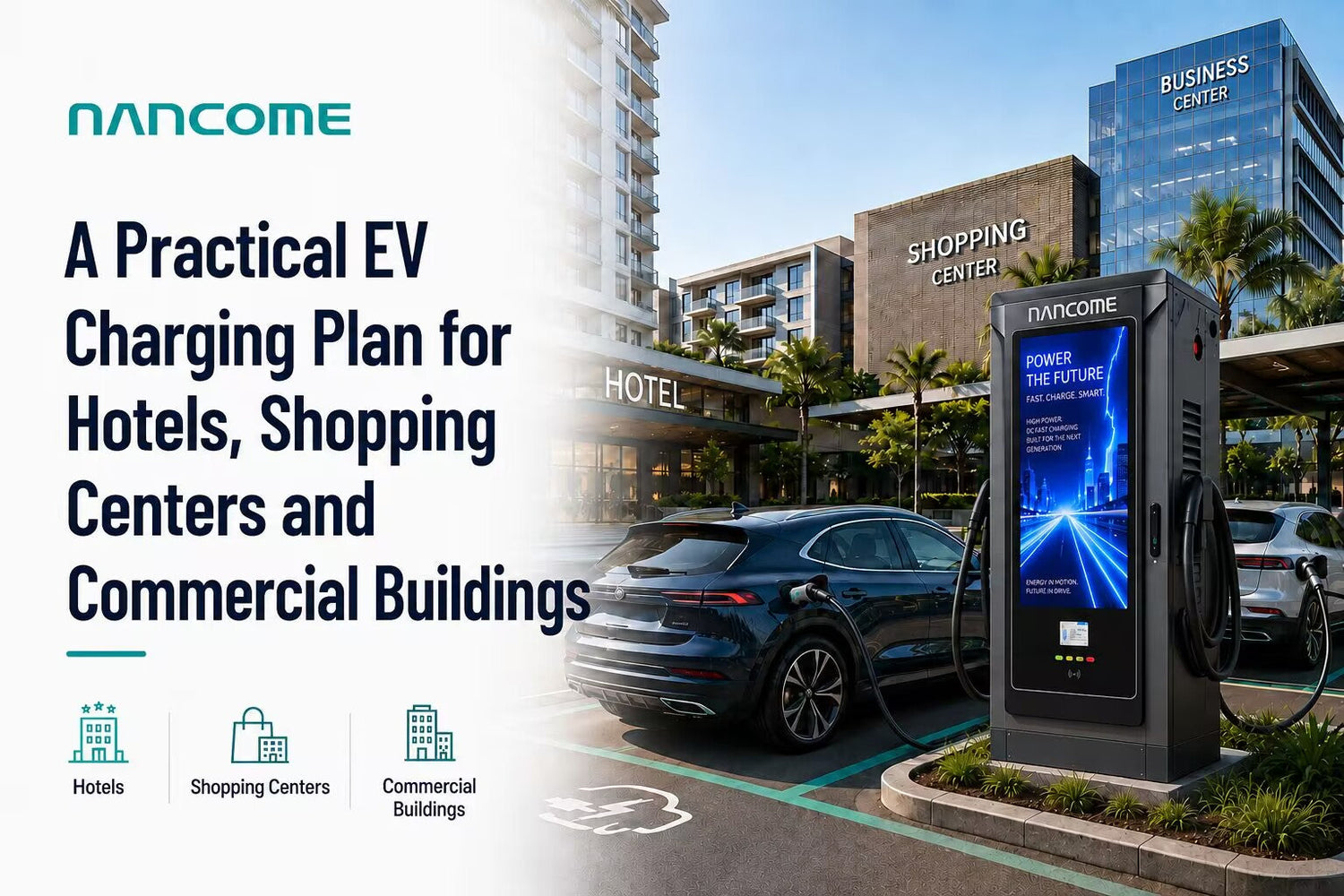
How dealerships, hotels, parking facilities, and small operators can balance charging experience, investment, and electrical capacity
Commercial Overview of DC Charging in Brazil
• According to ABVE, Brazil registered 215,023 electrified light vehicles in the first half of 2026, reaching 15.8% of the market. This growth increases the need for more professional charging projects, although direct charging demand is concentrated among plug-in vehicles.
• In June 2026, plug-in vehicles represented 83% of sales in the electrified vehicle segment, according to ABVE. This progress is increasing demand for charging at commercial destinations and service networks.
• The ABVE/Tupi survey released in June 2026 recorded 25,429 public and semi-public charging points, of which 8,601 were DC fast chargers. DC charging infrastructure expanded by 32.8% in only three months.
1) 60kW addresses an intermediate market need
• The Brazilian market is moving beyond a stage of a few isolated projects and entering a period of greater scale. Even so, many buyers do not operate high-power hubs; they need a reliable first commercial charger.
• 60kW offers more capacity than compact entry-level DC solutions without automatically requiring the infrastructure typical of an ultra-fast charging station. This intermediate position is useful for projects that need to demonstrate value to users while keeping investment under control.
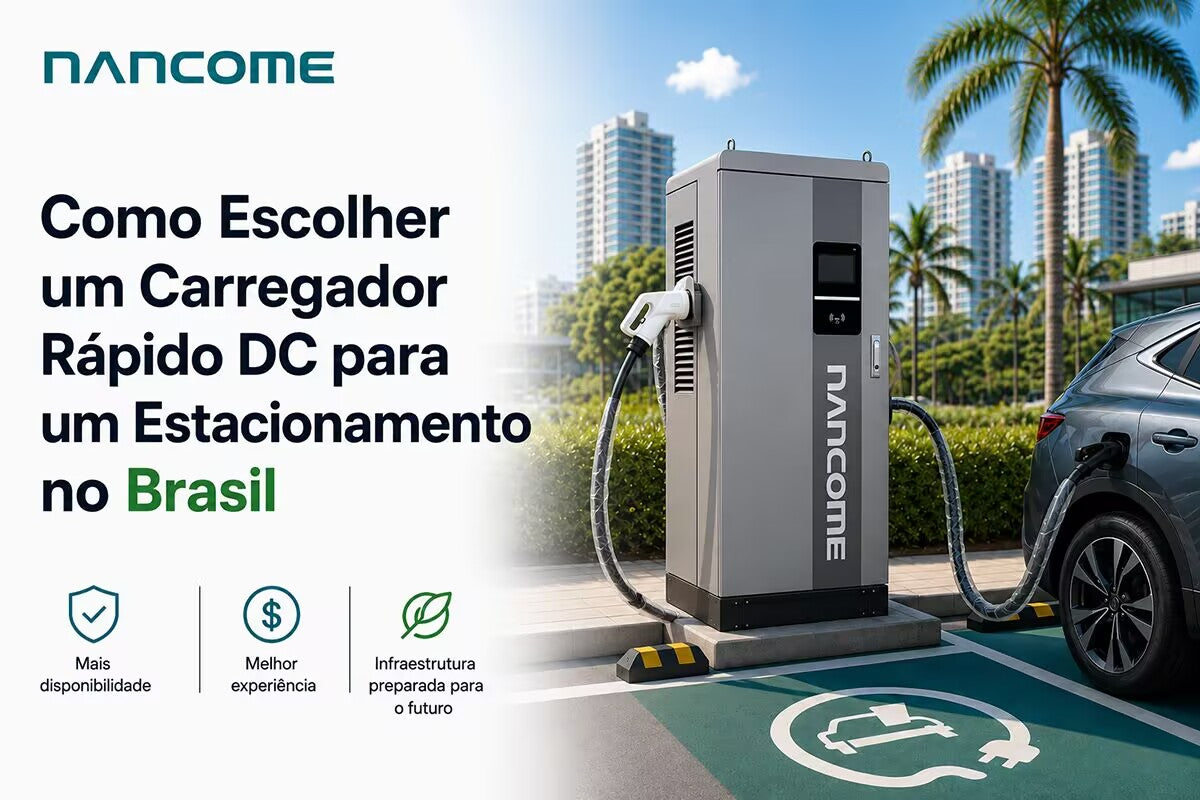
• For NANCOME, the 60kW CCS2 DC charger is a central model for distributors, dealerships, and commercial sites in Brazil.
2) Applications where 60kW usually works well
• Dealerships and service centers can use 60kW for demonstration vehicles, vehicle delivery, after-sales service, and fleet preparation.
• Hotels, shopping centers, and parking facilities can offer faster charging for users with moderate dwell times.
• Small operators and adjacent fuel-station sites can start a paid charging operation without beginning with power above proven demand.
• Small fleets can use 60kW when charging windows and the number of simultaneous vehicles are known.
3) Sufficient speed depends on the actual charging session
• The user experience does not depend only on the 60kW rating. The vehicle may limit the power, and the charging curve normally decreases as the battery approaches higher charge levels.
• For many sites, the objective is not to charge from 0% to 100%, but to recover enough energy during a commercial stop. This use makes 60kW a practical option for medium-duration sessions.
• The analysis should consider the energy required, available time, and number of sessions rather than promise a fixed charging time for every vehicle.
4) One or two outputs
• One output may be sufficient for dealerships or sites where simultaneous arrivals are rare. Two outputs increase flexibility in parking facilities and operations with more than one charging space.
• With a dual-output configuration, the power-sharing logic must be clearly explained. The buyer needs to know whether power is divided dynamically and which priorities can be configured.
• The parking-space layout, cable reach, and maintenance access should be defined before the configuration is selected.
5) CCS2 and connectivity for Brazil
• CCS2 should be the standard configuration for NANCOME commercial projects in Brazil unless the customer confirms a special requirement.
• OCPP, 4G/LAN, and RFID allow the charger to be integrated into a connected operation. The equipment can transmit status, charging sessions, metering data, and alarms to a compatible platform.
• NANCOME works with OCPP 1.6J and can evaluate OCPP 2.0.1 according to project requirements. Integration should include documentation exchange, configuration, and testing with the customer's platform.
6) The electrical side determines feasibility
• Before confirming 60kW, verify the input voltage, transformer, maximum load, three-phase power supply, protection, and cable distance.
• In many projects, infrastructure cost and electrical demand are more decisive than the difference between charger models.
• NANCOME's electrical experience since 1992 supports the provision of connection requirements and discussion of the charger together with cabinets and power distribution. The local project must be validated by qualified Brazilian professionals.
7) Platform and billing should be defined separately
• OCPP is the communication channel, not the billing system. The app, Pix, card payment, tariffs, user management, and reports depend on the platform.
• Customers that already have a backend should validate compatibility. Customers without a backend can evaluate a subscription-based partner solution without treating that platform as a free NANCOME app.
• This separation avoids incorrect expectations and allows hardware and software to be selected more flexibly.
8) Phased expansion
• A site can start with one 60kW unit and reserve infrastructure for additional charging spaces. This approach allows utilization, peak hours, and user behavior to be measured before expansion.
• Conduits, distribution-board space, communication, and layout can be prepared for expansion even if additional chargers are not installed in the first phase.
• If demand grows, the operator can evaluate additional units, 80kW, or a higher-power architecture. Expansion should be based on data.
9) Applicable NANCOME advantages
• On nancome.com, the floor-standing charger line highlights remote operation, customization, and solutions for parking facilities and fleets. For Brazil, these capabilities should be configured around 60kW, CCS2, and OCPP.
• NANCOME can provide preparation documentation, electrical requirements, remote fault support, software updates, and recommendations for common spare parts.
• Distributors can also discuss logo and appearance customization, while the local installer remains responsible for installation, approval, and on-site service.
10) Information required for a proposal
• Business type and purpose of the charger.
• Vehicles, CCS2, one or two outputs, and charging sessions per day.
• Voltage, transformer, available demand, and cable distance.
• Existing OCPP platform, RFID, and billing requirements.
• Timeline, initial quantity, and expansion plan.
Result:
60kW is a practical choice because it serves many commercial sites without making higher power an isolated objective. When demand, infrastructure, and platform requirements are confirmed, a 60kW charger can provide a balanced foundation for deployment and expansion.

Deixar comentário
Os comentários precisam ser aprovados antes da publicação.
Este site é protegido por hCaptcha e a Política de privacidade e os Termos de serviço do hCaptcha se aplicam.