
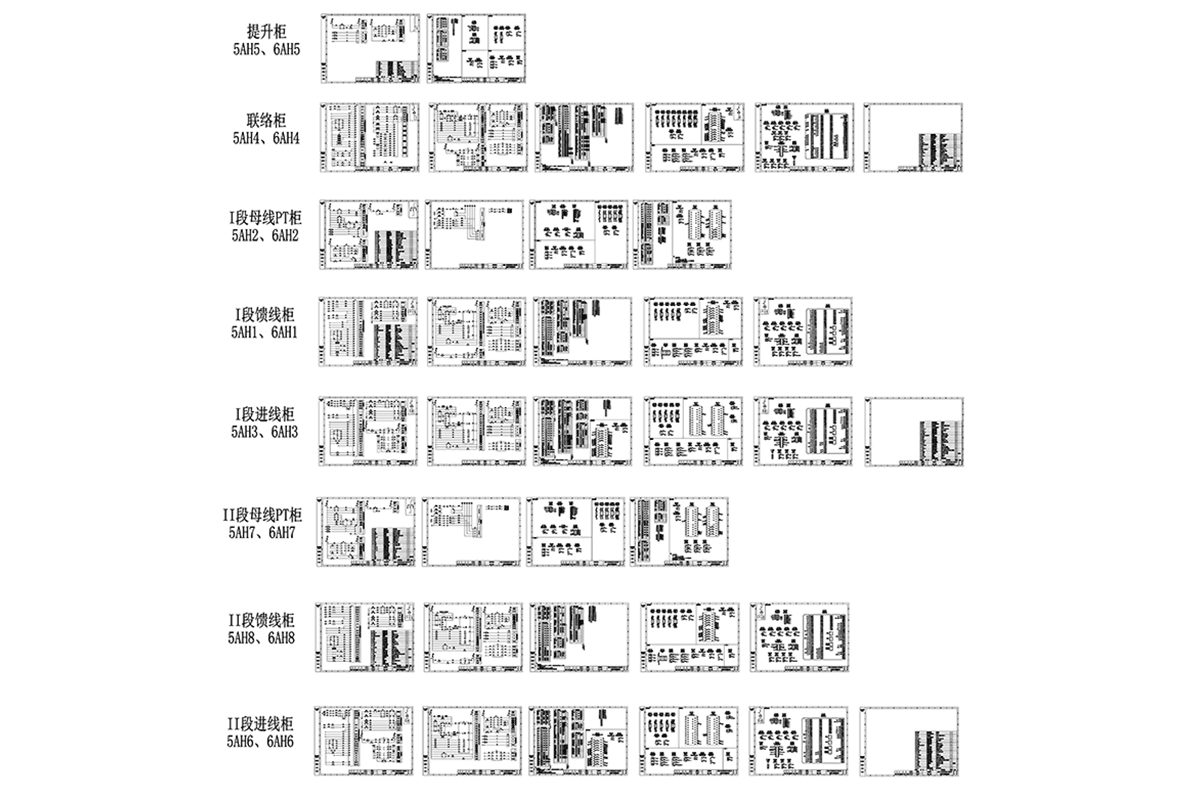
Figure 1 | Example of a school power distribution drawing (from the customer’s attachment). This illustrates the drawing deliverables we provide for MV/LV cabinets and the overall architecture.
Schools typically have distributed loads, concentrated usage periods, and critical systems that cannot go down. That’s why we don’t just supply equipment—we deliver a complete school low-voltage distribution cabinet solution with engineering support and drawing packages. The goal is to help EPC contractors and school owners approve drawings faster, build faster, and operate the system with fewer outages.
Note on the attached drawing: we recommend cropping the main backbone—utility MV incoming → MV switchgear / RMU → transformer → low-voltage distribution cabinet (incoming / bus coupler / feeder sections) → building distribution boards—and inserting it as Figure 1 to make the architecture immediately understandable.
1) What school projects care about most
In school facilities, the challenge is rarely ‘buy bigger equipment’. The real priorities are: safety compliance, stable operation, easy maintenance, and future expansion without major rework. A clean low-voltage distribution cabinet design with clear labeling and logical zoning directly reduces troubleshooting time and outage impact.
Typical stakeholder concerns include:
· Safety: proper protection coordination and clear cabinet/circuit separation
· Reliability: isolating faults so one issue does not take down the entire campus
· Maintainability: fast locating to cabinet, circuit, and terminals during servicing
· Scalability: reserved capacity and spare ways for future buildings, HVAC, labs, and IT loads
2) Standard architecture: MV incoming → transformer → LV distribution cabinet zoning
A typical school power distribution room design is organized in three layers:
1) MV side: MV incoming protection and sectionalizing using MV switchgear or a ring main unit (RMU).
2) Transformer: stepping down MV to 400 V LV supply for campus loads.
3) LV side: the low-voltage distribution cabinet becomes the central point for safe power allocation to each building and functional zone, then down to sub-distribution boards on each building/floor.
From a delivery standpoint, owners and consultants respond best when the system is tied to drawings: a one-line diagram for school power distribution, cabinet layout, secondary schematics, terminal plans, circuit schedules, cable lists, and BOM.
3) How to structure the LV distribution cabinet for real-life maintenance
Many school sites suffer later because the LV cabinets were not structured clearly. We recommend a standard split that is easy to maintain:
• incoming cabinet (main incomer): receives transformer LV output, includes ACB/MCCB and main busbar for total isolation/protection.
• metering cabinet (energy metering): main and sub-metering for dorms, canteens, gyms and other cost centers.
• bus coupler cabinet (bus-tie): for dual transformers or dual sources, enabling bus sectionalizing and backup feeding (subject to capacity checks).
• outgoing feeder cabinet: zoned outgoing circuits by building/function, with critical loads on dedicated feeders to limit fault impact.

4) ‘Must-not-trip’ circuits in schools: how to land them in the distribution cabinet
Critical school loads typically include fire protection equipment (fire pumps, smoke exhaust fans), emergency lighting, security/access control, and data rooms / core network switches (often supported by UPS). The practical approach is:
1) Dedicated feeders for critical loads: separate them in the outgoing feeder cabinet rather than mixing with general lighting/outlets.
2) Reserve interfaces for future backup power: plan space for ATS and changeover wiring if a generator or energy storage may be added later.
3) Clear secondary logic: define interlocks, emergency stop, signals and alarms in the distribution cabinet secondary schematic diagram for faster commissioning and troubleshooting.
5) What we deliver: solution + drawings + distribution cabinet customization
If the project scope is a new build or renovation, we support the full package—not only cabinets, but also engineering and drawings:
· Requirement mapping: load list, zoning logic, and future expansion plan
· System proposal: MV/RMU arrangement, transformer sizing suggestion, and LV cabinet zoning
· Drawing deliverables: one-line diagram, distribution cabinet layout drawing, distribution cabinet secondary schematic diagram, terminal block diagram for distribution cabinets, distribution cabinet circuit schedule, cable list, and distribution cabinet bill of materials (BOM)
· Customization: cabinet dimensions, cable entry/exit, metering/communications, and component brand selection (subject to project standards)
· Technical support: remote Q&A, FAT documents, and commissioning assistance (as contracted)
6) What we need from the customer to start producing drawings
To speed up evaluation and produce a proposal plus drawings, we typically only need:
· Utility voltage level and transformer information (or target capacity for new sites)
· Building and function list (teaching blocks, dorms, canteen, gym, data room, etc.)
· Critical-load requirements (fire system, emergency lighting, UPS, etc.)
· Local standards and acceptance requirements (if applicable)
With these inputs, we can first provide a concept package (proposal + draft one-line diagram), then deepen into cabinet secondary schematics and construction drawings for tendering and site work.
7) Closing: why schools prefer suppliers who can deliver drawings
In school projects, progress is driven by actionable documents, not only promises. When the owner sees clear cabinet zoning, circuit naming, and complete drawing sets (secondary schematics + terminal plans), approval and implementation become much faster.
References (traceable)
• Schneider Electric – Electrical Installation Guide (IEC 60364 aligned): https://www.se.com/ww/en/work/products/product-launch/electrical-installation-guide/
• Electrical Installation Guide (PDF example): https://fenix.tecnico.ulisboa.pt/downloadFile/1126518382241064/Electrical-Installation-Guide-2018.pdf
• ABB – IEC 61439 in practice (LV switchgear & controlgear assemblies): https://library.e.abb.com/public/32f98df19e5849e1b6b5d6172e00be73/2CPC000313B0201.pdf
• Siemens – IEC 61439 overview (LV switchboards/distribution boards): https://www.siemens.com/global/en/products/energy/low-voltage/systems/iec61439.html
• Eaton – Fundamentals of Automatic Transfer Switches (ATS): https://www.eaton.com/us/en-us/products/low-voltage-power-distribution-control-systems/automatic-transfer-switches/automatic-transfer-switch-fundamentals.html
• Eaton – Transfer switch 101 (whitepaper PDF): https://www.eaton.com/content/dam/eaton/products/low-voltage-power-distribution-controls-systems/ats/wp140001en.pdf
• ABB – Introduction to MV switchgear (compartment/maintenance concepts): https://new.abb.com/docs/librariesprovider60/default-document-library/introduction-to-mv-switchgear_david-supple.pdf

Leave comment
所有评论在发布前都会经过审核。
此站点受 hCaptcha 保护,并且 hCaptcha 隐私政策和服务条款适用。