
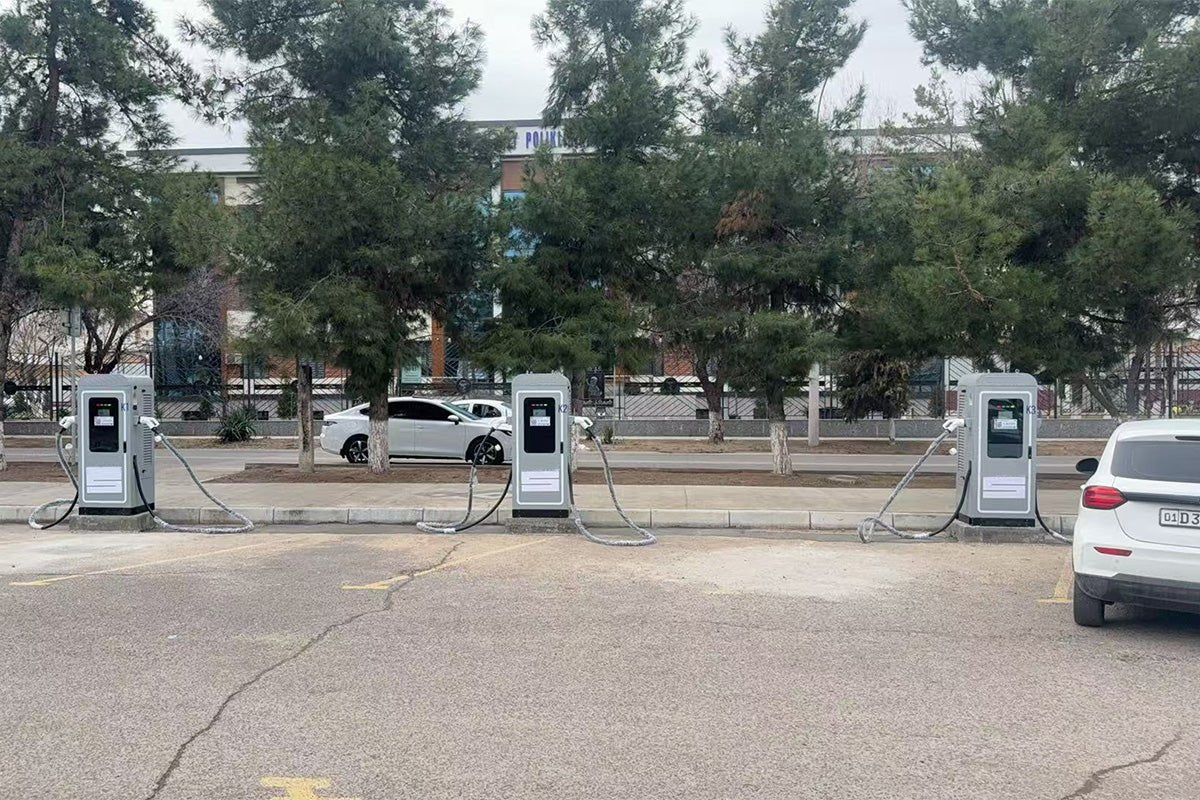
Why commercial charging is shifting from charger quantity to smarter high-power networks
Global EV Charging Infrastructure Snapshot – 2026
• Public charging is still expanding, but the market focus is moving from charger count to station quality, power capacity, uptime, payment convenience, and operating efficiency.
• BloombergNEF reported that global public charging networks reached 6.7 million connectors in 2025 after 28% year-on-year growth, with new installations expected to keep increasing in 2026.
• The IEA reported that more than 1.3 million public charging points were added globally in 2024, and China accounted for about 65% of the global public charging stock.
• Policy is pushing charging networks toward faster corridors, open access, data visibility, reliability, and long-term operation instead of simple hardware deployment.
• For operators, the next stage is not only choosing a dc fast charger, but building a complete charging system that matches the grid, users, vehicles, and business model.
NANCOME Perspective
In 2026, the strongest charging projects will be built around project-fit systems. NANCOME treats EV charging as part of a wider electrical system, combining intelligent charging equipment manufacturing, electrical engineering experience since 1992, project-oriented technical support, and flexible customization for different markets.
1) Market Direction: From More Chargers to Higher Utilization
• The first stage of EV infrastructure growth was mainly about coverage. Countries, operators, and property owners needed to install enough chargers to reduce range anxiety and support early EV adoption.
• The 2026 stage is different. Many charging investors now care more about charger utilization, parking flow, power availability, user access, service uptime, and return on investment.
• A public charger that is rarely used does not create a strong business case. A fast charger that is often offline damages customer trust. A high-power station without proper grid planning can create high costs before it creates revenue.
• This is why commercial projects are shifting toward better site planning and better system matching. Charger power, output range, connector type, communication method, and maintenance process must be planned together.
2) Policy Direction: Fast-Charging Corridors and Reliable User Access
Government policy is still one of the strongest drivers of charging infrastructure. However, the policy focus is becoming more detailed. It is no longer only about subsidies or charger quantity. It is about whether charging is available, easy to use, transparent, connected, and reliable.
• In Europe, the Alternative Fuels Infrastructure Regulation is pushing fast-charging coverage along the TEN-T road network and sets stronger power output requirements for key corridors.
• In the United States, the NEVI program supports the acquisition, installation, network connection, operation, maintenance, access, reliability, and long-term data sharing of EV chargers.
• For charging equipment suppliers, these policy signals create demand for chargers that are not only powerful, but also network-ready, platform-compatible, and suitable for long-term field operation.
3) Technology Direction: The dc fast charger Becomes the Core Commercial Asset
AC charging will continue to serve homes, workplaces, hotels, and long-duration parking. But for public stations, commercial parking areas, highway service zones, logistics depots, taxi fleets, and bus operations, the dc fast charger is becoming the core commercial asset.
• A dc fast charger reduces charging time and increases vehicle turnover, which directly affects commercial station revenue.
• It supports higher daily charging demand when vehicles cannot stay parked for several hours.
• It is more suitable for public and fleet scenarios where charging speed, availability, and schedule control are important.
• It requires stronger attention to power distribution, protection design, thermal management, communication, and maintenance response.
This is why a dc fast charger should not be selected only by comparing power and price. It should be evaluated as part of a complete site system.
4) High-Power Deployment: Why the 180kw charging station Is a Practical Step
As battery capacity increases and drivers expect shorter charging stops, operators are considering higher DC power levels. At the same time, very high-power systems may require more demanding grid upgrades, heavier electrical design, and higher upfront investment. For many projects, the 180kw charging station is a practical mid-to-high-power option.
• Compared with lower-power DC chargers, a 180kw charging station can shorten charging time and serve more vehicles during busy periods.
• Compared with ultra-high-power systems, it can be easier to deploy in many urban commercial sites, public parking areas, service stations, and fleet depots.
• It can support passenger cars, ride-hailing vehicles, light commercial vehicles, and many fleet scenarios when the site power condition is properly evaluated.
• For expansion projects, it can also be used as a staged deployment path before moving to 240kW, 360kW, or higher configurations.
NANCOME can support flexible power configuration according to project requirements, helping customers choose between standard DC fast chargers, a 180kw charging station, or a larger high power charging station based on real site demand.
5) Business Direction: The ev charger station business Is Becoming an Operation Business
Many investors first ask about charger price, installation cost, and the number of charging guns. These questions are important, but they are not enough. A successful ev charger station business depends on long-term daily operation.
• How many vehicles will use the site each day?
• What is the peak charging period?
• Will users pay by app, RFID card, credit card, operator account, or fleet settlement?
• How will the operator know if a charger is offline?
• How quickly can faults be detected and solved?
• Can charging data support pricing, maintenance, and expansion decisions?
The ev charger station business is moving from hardware ownership to operational capability. This means station owners need equipment that can connect with management platforms, support billing records, provide alarm information, and maintain stable service under real usage conditions.
6) Grid and Site Engineering: Charging Is Part of a Larger Power System
One of the biggest differences between a simple charger purchase and a real charging infrastructure project is the electrical system behind the charger. A high power charging station can place heavy demand on the transformer, distribution cabinet, cables, grounding system, protection devices, and cooling structure.
Based on electrical manufacturing experience since 1992, NANCOME integrates knowledge of power distribution, protection design, thermal management, and system safety into its charging products. This engineering foundation is important because DC fast charging projects often fail not because the charger cabinet looks wrong, but because the project is not properly matched to the site.
• Available grid capacity should be checked before selecting charger power.
• Transformer margin and cable sizing should be considered during station planning.
• Protection coordination should be matched with the charger, distribution system, and local installation conditions.
• Thermal management should support long operating hours and local climate conditions.
• Communication, payment, and backend connection should be confirmed before equipment delivery.
7) Smart Operation: Platform-Ready Chargers Will Be Easier to Scale
Charging networks in 2026 are becoming connected networks. For a single charger, local operation may be acceptable. For public stations, fleet depots, and multi-site operators, remote monitoring and data management are becoming basic requirements.
• Operators need to see charger status, connector status, charging power, session records, and fault alarms remotely.
• Fleet customers need vehicle-level or user-level charging records for internal management and settlement.
• Station owners need revenue, energy consumption, utilization, and maintenance data to understand business performance.
• Platform connectivity helps operators expand from one station to multiple sites without increasing manual inspection in the same proportion.
For a future-ready dc fast charger project, OCPP support, network communication, remote diagnostics, and backend compatibility should be discussed early in the project, not after installation.
8) Fleet Charging Will Be One of the Strongest Growth Scenarios
Fleet electrification will continue to create strong demand for fast, predictable, and manageable charging infrastructure. Buses, taxis, logistics vehicles, service vehicles, municipal fleets, and corporate fleets all have different charging behavior compared with private drivers.
• Fleet charging is linked to vehicle dispatching, shift schedules, driver management, and route planning.
• Charging downtime can directly affect business operation, especially for logistics, taxi, ride-hailing, and bus fleets.
• Some fleet depots need overnight charging, while others need daytime fast charging or peak-hour backup.
• A high power charging station can improve fleet turnaround, but the site must be planned around grid capacity and operating rhythm.
NANCOME provides DC fast chargers, high-power charging systems, commercial AC chargers, portable DC chargers, and mobile energy storage charging systems. This product range allows fleet projects to combine fixed charging, fast charging, and flexible backup charging according to real operating needs.
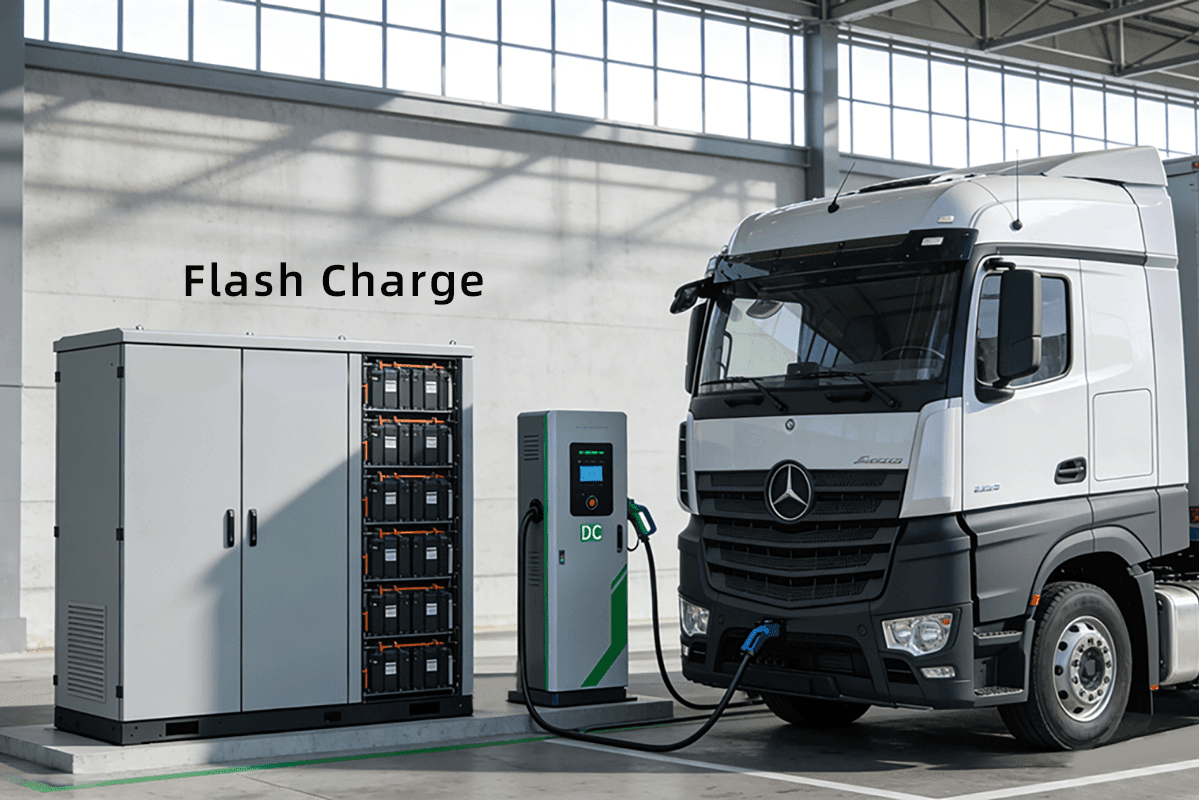
9) Mobile Energy Replenishment Adds Flexibility to Infrastructure Planning
Not every charging need can be solved by fixed stations. Some locations face delayed grid upgrades, temporary project demand, roadside emergencies, outdoor events, port operations, mining sites, or fleet backup requirements. In these cases, mobile energy replenishment can support the charging ecosystem.
• Mobile energy storage charging systems can provide temporary charging before a fixed station is fully built.
• They can support emergency charging, vehicle testing, event parking, fleet backup, and remote working environments.
• They can help operators test site demand before committing to full civil and electrical construction.
• They can reduce service gaps when fixed grid capacity is limited or when demand is seasonal.
This is why mobile replenishment should not be seen as a separate product category only. It can become part of a wider charging infrastructure strategy.
10) Regional Differences Will Require More Customization
The global charging market is not developing in one single format. Europe, North America, Southeast Asia, the Middle East, Latin America, Africa, and Central Asia all have different grid conditions, vehicle standards, payment habits, languages, climates, and operating models.
• Connector standards may include CCS1, CCS2, GB/T, CHAdeMO, or market-specific requirements.
• Communication may require Ethernet, Wi-Fi, 4G, OCPP integration, or local platform adaptation.
• User interfaces may need different languages, brand identity, payment logic, and operating instructions.
• Outdoor cabinets may need different protection, cooling, and installation approaches depending on site conditions.
• Commercial customers may need OEM or ODM cooperation to match local market positioning.
NANCOME’s flexible manufacturing and customization capability helps partners adapt charging equipment to real market requirements while maintaining reliability and manufacturability.
11) What NANCOME Provides for 2026 Charging Infrastructure Projects
NANCOME is positioned as an intelligent EV charging equipment manufacturer and a project-oriented charging solution partner. Its role is not limited to supplying chargers. The company supports customers in matching charging equipment with real site conditions, operating scenarios, and local market needs.
• Intelligent charging equipment: DC fast chargers, commercial AC chargers, portable DC chargers, high-power charging systems, and mobile energy storage charging systems.
• Electrical engineering foundation: manufacturing experience since 1992, with attention to distribution, protection, thermal management, and system safety.
• Project-oriented support: technical judgment on site power conditions, charger power selection, protection coordination, communication connection, and deployment planning before delivery.
• Flexible customization: practical support for charging standards, power configuration, language, communication requirements, branding, and installation methods.
• Scenario coverage: commercial charging stations, public charging networks, office and workplace charging, fleet depots, highway charging, and mobile energy replenishment projects.
12) Operator Checklist for 2026 Charging Projects
• Define the primary charging scenario: public, fleet, commercial parking, highway, office, or mobile replenishment.
• Confirm vehicle types, connector standards, battery voltage range, and expected charging behavior.
• Check transformer capacity, cable routing, protection requirements, grounding, and local installation conditions.
• Choose a suitable power level instead of simply selecting the highest available charger power.
• Confirm backend connection, payment method, remote monitoring, fault alarm, and maintenance workflow.
• Plan future expansion, including additional chargers, higher power, mobile backup, or energy storage integration.
• Work with a manufacturer that can understand both equipment manufacturing and project deployment.
Result
The future of EV charging infrastructure in 2026 will be shaped by smarter, faster, and more project-oriented systems. A dc fast charger is becoming the foundation of commercial charging, but successful deployment requires more than hardware. A high power charging station must be matched with grid capacity, protection design, backend communication, payment flow, and maintenance planning. For investors building an ev charger station business, configurations such as a 180kw charging station can offer a practical balance between charging speed, deployment cost, and operating value. With intelligent equipment manufacturing, electrical engineering experience, project-oriented support, and flexible customization, NANCOME helps partners build charging infrastructure that is better prepared for real market growt
Source Notes for Internal Reference
• BloombergNEF Electric Vehicle Outlook 2026: https://about.bnef.com/insights/clean-transport/electric-vehicle-outlook/
• IEA Global EV Outlook 2025 – Electric Vehicle Charging: https://www.iea.org/reports/global-ev-outlook-2025/electric-vehicle-charging
• EU Alternative Fuels Infrastructure Regulation summary: https://eur-lex.europa.eu/EN/legal-content/summary/deployment-of-alternative-fuels-infrastructure.html
• U.S. DOE Alternative Fuels Data Center – NEVI Formula Program: https://afdc.energy.gov/laws/12744

Leave comment
所有评论在发布前都会经过审核。
此站点受 hCaptcha 保护,并且 hCaptcha 隐私政策和服务条款适用。