
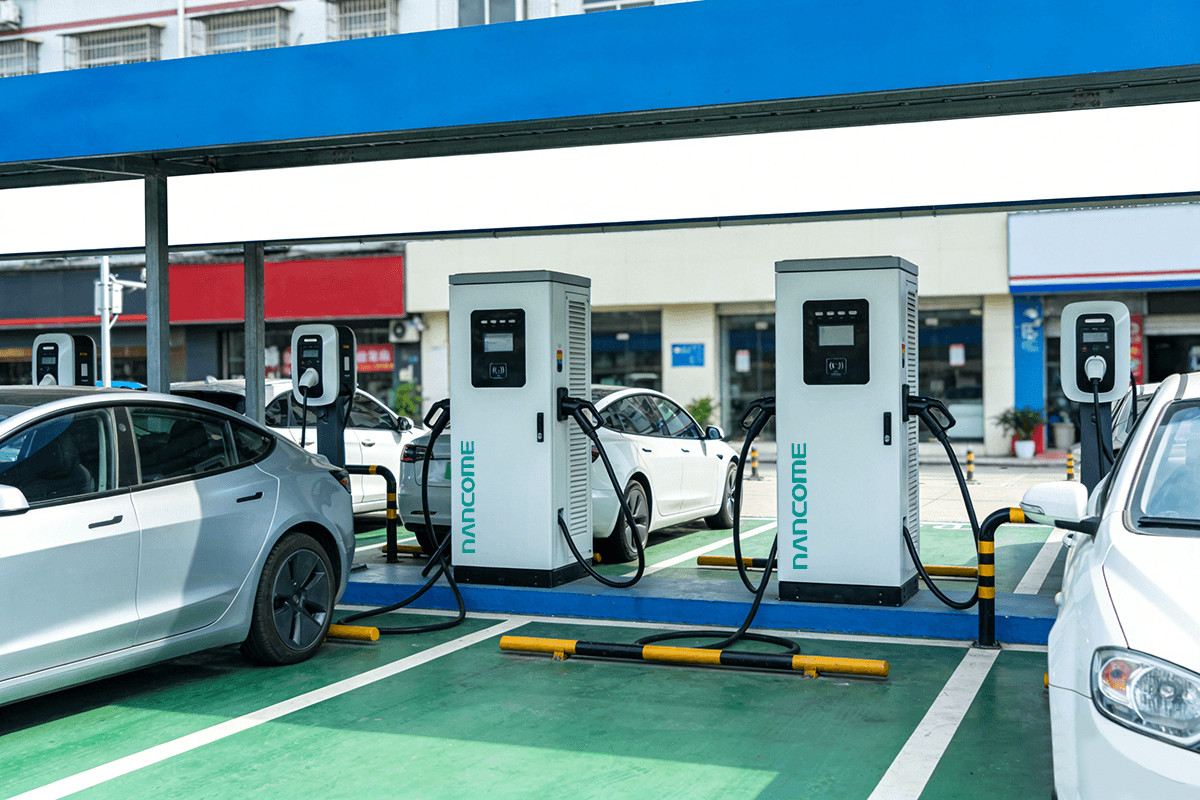
This is a hands‑on guide for absolute beginners: no power‑engineering background required, and no need to chase 'the bigger, the better'. Spend money where it matters, get the site running, then iterate.
1) Start with the Right Principle: Bigger Power Isn’t Always Better
Most cars on the road today are still 400V models. In the middle of a session (around 20%–70% state of charge), many of them actually take about 90–130 kW depending on the battery and temperature. This is a 400V-friendly DC fast charging solution for most users.
Ultra‑high power liquid‑cooled units are not beginner‑friendly: they are expensive, harder to install, and more complex to maintain. More importantly, the real utility bill, including demand components, can get out of control.
Conclusion: to prove the business with a small budget, use air‑cooled DC fast charging as your workhorse plus a bit of AC for overnight parking. Invest in location, queue experience, and backend operations—not in flashy specs.
2) A Three‑Step Site Selection That’s Easy to Copy
Who is charging here? Commuters, ride‑hailing, mall parking, or residents at night? Different user groups define hours and turnover.
What’s your power limit? Check existing transformer and allowable new circuits. If upgrades are slow, start with smaller concurrent power and avoid buying oversized hardware. Use a site selection checklist for charging stations.
Traffic flow and safety: can vehicles enter and exit without conflict? Add shade, lighting, and cameras. Make sure card/QR payments work safely in the rain. Consider deployment in weak-grid scenarios if utility capacity is tight.
3) Minimal Viable Configuration (MVP): Open with Just Five Bays
Workhorse DC (air‑cooled): choose a dual‑gun 120–150 kW air‑cooled DC pair as your throughput backbone. For example, a dual-gun 120 kW air-cooled DC charger and a dual-gun 150 kW air-cooled DC charger.
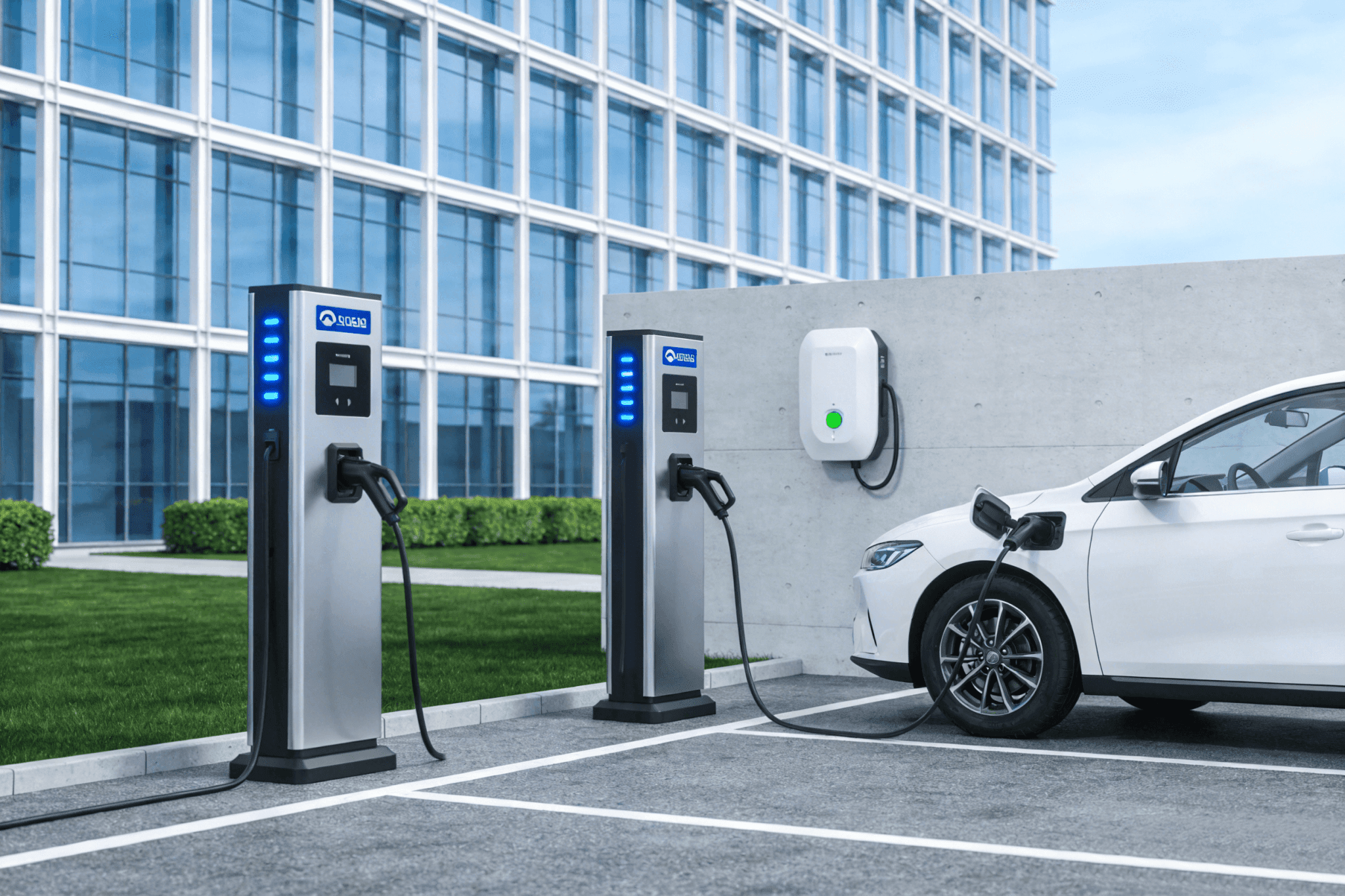
AC top‑up (overnight): add two 7–22 kW AC points to cover long‑stay or overnight parking, i.e., overnight AC slow charging.
Open backend: adopt an OCPP 1.6 open backend (wired/4G) so you can plug in payments, membership, coupons, and booking later—without vendor lock‑in.
Not recommended for the first phase: ultra‑high‑power liquid‑cooled units, too many stalls on day one, or immediate utility‑capacity upgrades.
4) Your Power Bill Decides Profitability: Control the Peaks First
In many regions, utilities bill by a 15‑minute average—this is the 15-minute billing window (demand charges). A short spike can inflate the whole month’s bill.
Three beginner moves that work and save money:
1) time-of-use (TOU) pricing with booking: steer movable sessions into shoulder/off‑peak and keep the message simple.
2) soft power caps for peak-hour load control: set per‑gun caps during the evening peak to flatten spikes.
3) Start without storage if the budget is tight: get booking and caps working first. If peaks remain painful, consider small-scale energy storage for peak shaving—for example, a 300 kWh peak-shaving system to cover a 15‑minute burst—only after your data proves the need.
5) Budget Sense: The Hidden Costs Most Newcomers Miss
Equipment price is not total cost. Add construction, trenching and cable runs, connectivity, backend fees, electricity and demand components, cleaning, security cameras, and routine maintenance. Understand your DC fast charging investment cost structure.
Build a one‑page budget: CAPEX (hardware/install/civil/connection), OPEX (energy—TOU + demand, telecom, platform, maintenance), and revenue (charging sales, parking, ads/brand partnerships). Start from a small charging-station cashflow model.
Aim for a simple first target like 500–1000 kWh/day. Once the queue experience and bill stability look good, then talk expansion.
6) Operations = User Experience: Three Actions You Can Apply Today
Make the booking entry obvious: signage + in‑station poster + app link, and clearly state that off‑peak is cheaper.
Keep payment simple: accept cards, QR, and member balance. If one method fails, the whole station shouldn’t stop.
Track four numbers weekly: availability, average wait, 15‑minute peak, and top‑3 complaints. This is basic queue experience optimization. Fixing these four moves your reputation fast.
7) Top Beginner Pitfalls (from Worst to Least Bad)
Buying ‘nameplate big power’ on day one: the station looks strong but the bill looks stronger; upgrades take time and money.
Closed backend: without OCPP, it’s hard to add payments/membership/third‑party platforms later.
Ignoring the 15‑minute window: one burst makes the whole month expensive.
Buying hardware but ignoring maintenance: low availability drives users away even if you built a great site.
Poor traffic design: complicated entry/exit or hard reversing makes drivers avoid your station.
8) A 30‑Day Plan You Can Literally Check Off
Week 1: define target users, confirm tariff and demand clauses, document traffic flow and bays.
Week 2: lock in two air‑cooled DC units (dual‑gun 120–150 kW) plus two 7–22 kW AC points; choose an OCPP 1.6 platform.
Week 3: order hardware, prepare on‑site guidance and payment materials; launch booking + TOU copy.
Week 4: commission and soft‑launch; monitor availability, queue, and peaks daily; if spikes appear, lower caps.
References (Traceable)
AFDC — Station development & O&M, cost structure, demand charges and TOU basics:
https://afdc.energy.gov/fuels/electricity-infrastructure-development ;
https://afdc.energy.gov/fuels/electricity-infrastructure-maintenance-and-operation
Open Charge Alliance — OCPP and version 1.6:
https://openchargealliance.org/protocols/open-charge-point-protocol/ ;
https://openchargealliance.org/protocols/ocpp-protocols/ocpp-1-6/
IEA — Global EV Outlook (public charging trends): https://www.iea.org/reports/global-ev-outlook-2024/trends-in-electric-vehicle-charging

Leave comment
所有评论在发布前都会经过审核。
此站点受 hCaptcha 保护,并且 hCaptcha 隐私政策和服务条款适用。