

Why the real cost of a commercial EV charging station is not only the charger price, but the full system behind it.
Commercial EV Charging Cost Snapshot - 2026
As public fast charging grows worldwide, more investors, fleet operators, parking owners, and infrastructure companies are asking one practical question: how much does it really cost to build an EV charging station?
The answer depends on more than the price of the charger. A commercial charging site may involve land preparation, utility connection, transformer capacity, switchgear, cables, civil works, canopy, safety protection, payment system, backend platform, construction labor, and long-term maintenance.
The U.S. Alternative Fuels Data Center notes that public and workplace Level 2 installation costs average around USD 2,500 per connector, while DC fast charger installation can range from about USD 20,000 to USD 60,000 per connector depending on charger power and site scale. This shows why dc fast charger cost should be evaluated as a full project cost, not only hardware cost.
The global market is also moving toward faster infrastructure. IEA reported that fast and ultra-fast public chargers grew from 1.5 million in 2024 to 2.2 million in 2025, a 40% increase. Commercial stations are becoming more power-intensive, more grid-dependent, and more project-driven.
For NANCOME, this is where equipment manufacturing, electrical engineering experience, and project-oriented technical support come together. A charging station is not a single cabinet placed in a parking lot. It is part of a broader electrical system.
1) Project Overview: Why EV Charging Station Cost Varies So Much
The construction cost of an EV charging station depends on the charging scenario. A small workplace charging site with AC chargers may only need basic electrical work. A public DC fast charging station may require higher grid capacity, a dedicated transformer, underground cable trenches, protection devices, network communication, payment access, and outdoor weather protection.
A fleet depot may need several chargers operating at the same time. A highway site may need a high-power DC fast charging system with larger electrical capacity. A solar ev charging station project may also include photovoltaic panels, inverters, battery energy storage, energy management, and additional structural work.
This is why two projects using the same charger model may have very different total costs. For an ev charger station business, the right question is not only “How much is one charger?” The better question is how the entire station will be designed, powered, protected, operated, and expanded.
• What vehicle types will use the station?
• How many charging sessions are expected per day?
• Is the grid capacity enough for peak charging demand?
• Will the project need transformer expansion?
• Does the business need solar, storage, or mobile charging support?
• How will the station be monitored and maintained?
NANCOME approaches these questions from a project perspective. Based on its electrical manufacturing foundation since 1992, NANCOME considers power distribution, protection design, thermal management, system safety, and real deployment conditions before recommending charging equipment.
2) Main Cost Components of an EV Charging Station
A complete charging station cost can usually be divided into eight major parts. These parts should be evaluated together because one decision can affect several cost categories at the same time.
| Cost Item | What It Includes | Why It Matters |
| Land or Site Use | Land purchase, lease, parking space use, site access | Affects long-term business cost and customer traffic |
| Civil Works | Ground leveling, foundation, cable trench, drainage, bollards | Supports safe installation and outdoor durability |
| Transformer | Grid connection, capacity upgrade, dedicated transformer | One of the biggest cost drivers for DC fast charging |
| Switchgear & Distribution | Low-voltage cabinet, protection devices, metering, breakers | Ensures power distribution and electrical safety |
| Cables & Conduits | AC/DC cables, communication cables, underground conduits | Cost rises with distance, power level, and trenching |
| Canopy & Site Facilities | Rain shelter, lighting, signage, parking layout, barriers | Improves user experience and equipment protection |
| Charging Equipment | DC fast charger, AC charger, solar ev charger, mobile charger | Core hardware for charging service |
| Installation & Commissioning | Labor, testing, network setup, platform connection | Determines whether the station can operate safely |
These cost items are not independent. For example, choosing a higher-power DC charger may increase the need for larger cables, stronger protection devices, transformer upgrades, more heat management, and more careful commissioning. This is why NANCOME treats EV charging equipment as part of a complete power system instead of an isolated device.
3) Land and Site Cost: Location Decides Business Potential
Land or site cost is often the first major factor in EV charging station construction. For public charging, the best site is usually not the cheapest site. A station near highways, shopping centers, office parks, fleet routes, logistics depots, or urban parking areas may bring higher utilization, but the land lease or cooperation cost may also be higher.
For an ev charger station business, location affects both cost and revenue. A better site can bring higher vehicle traffic, shorter waiting time, better charger utilization, stronger brand visibility, higher repeat usage, and more potential for retail or parking income.
Before choosing equipment, operators should evaluate the site’s parking layout, vehicle entry and exit path, grid access point, cable distance, user dwell time, and future expansion space. NANCOME can support charging partners by helping match charger power and product configuration with actual site conditions, instead of choosing equipment only by power rating.
4) Civil Works: The Hidden Cost Behind Charging Equipment
Civil works are often underestimated. For outdoor charging stations, civil work may include ground preparation, concrete foundation, cable trenching, drainage design, protective barriers, parking markings, equipment base, and sometimes road surface repair.
The cost becomes higher when the charger is far from the power source, the ground needs cutting or rebuilding, underground utilities must be avoided, the site needs water drainage improvement, heavy vehicles or buses will use the station, or multiple chargers need parallel cable routes.
For DC fast charging projects, the foundation must support equipment weight and ensure safe outdoor operation. Cable trenches must be planned carefully because high-power cables are larger, heavier, and more expensive than ordinary electrical wiring. A low equipment price does not always mean a low project cost if the site layout is not planned well.
5) Transformer and Grid Capacity: The Key Driver of DC Fast Charger Cost
For most commercial DC charging projects, transformer and grid capacity are among the most important cost drivers. A dc fast charger cost estimate should always include the electrical capacity behind the charger. A 60kW DC charger, a 180kW DC charger, and a 480kW high-power charging station have very different requirements for transformer capacity, cable size, protection devices, and grid approval.
If the existing site has enough power capacity, the project may only need distribution modification and charger installation. If the existing capacity is insufficient, the operator may need a new transformer, utility upgrade, or staged deployment plan. This can significantly change the project budget.
For fleet depots and public fast charging sites, operators should calculate not only the rated power of one charger, but the simultaneous charging demand of the whole site. A solar + storage charging site may reduce some peak demand pressure, but it adds PV and battery system cost.
NANCOME’s background in power distribution and electrical protection helps customers evaluate charger configuration from a system perspective. For B2B customers, this is important because transformer mistakes or insufficient power planning can affect the entire station’s operation.
6) Switchgear, Protection and Metering: Critical for Safety
Switchgear and distribution equipment are essential for a charging station. This may include low-voltage distribution cabinet, circuit breakers, surge protection devices, metering system, emergency stop circuit, grounding system, isolation protection, communication interface, and energy management devices.
Although these components may not look as visible as the charging cabinet, they directly affect safety, reliability, and maintenance. High-power charging creates higher current and stronger thermal load. The system must be designed with proper protection coordination.
This is where NANCOME’s electrical engineering foundation becomes part of product value. Since 1992, NANCOME has accumulated experience in electrical manufacturing, allowing the company to integrate knowledge of power distribution, protection design, thermal management, and system safety into charging products and project support.
7) Cables and Installation Distance: A Cost That Can Grow Quickly
Cable cost is often affected by three factors: power level, distance from power source, and installation method. High-power DC charging requires larger cable capacity. If the charger is far from the transformer or distribution cabinet, cable cost and trenching cost will increase.
For a commercial charging station, cable planning should happen before the equipment is placed. Moving a charger a few meters may seem simple in layout design, but it can increase cable length, trench work, voltage drop, and labor cost.
• Keep power cable routes short and practical.
• Separate power and communication lines safely.
• Reserve space for future expansion.
• Make maintenance access easy for operators.
• Plan vehicle parking direction and charging cable reach together.
For NANCOME projects, charger placement should be considered together with site layout, electrical room position, parking flow, and future equipment expansion.
8) Canopy, Lighting and Site Facilities: More Than Decoration
A canopy is not always required, but it can be important for outdoor commercial charging stations. It can provide rain protection, sun protection, better user experience, improved station visibility, space for lighting and signage, additional brand presentation, and protection for charging equipment and users.
For high-traffic public stations, canopy, lighting, security cameras, signage, parking barriers, and ground markings can improve user experience and reduce operational problems. For heavy-duty or fleet charging sites, the canopy and layout must also consider vehicle height, turning radius, cable reach, and safe driver movement.
9) Charging Equipment Cost: Why Power Level and Configuration Matter
Charging equipment is the core visible cost of a station. The equipment cost depends on AC or DC charging type, power level, single-gun or dual-gun design, output voltage range, connector standard, screen size, payment function, communication method, OCPP platform compatibility, IP protection level, cooling structure, custom branding, and local language interface.
For an ev charger station business, equipment selection should match the station’s target users. A shopping mall may need medium-power DC chargers for visitor charging. A logistics fleet may need high-power DC chargers for faster turnaround. A bus depot may need multiple chargers and scheduled charging management. A roadside service site may need DC fast chargers with strong outdoor performance.
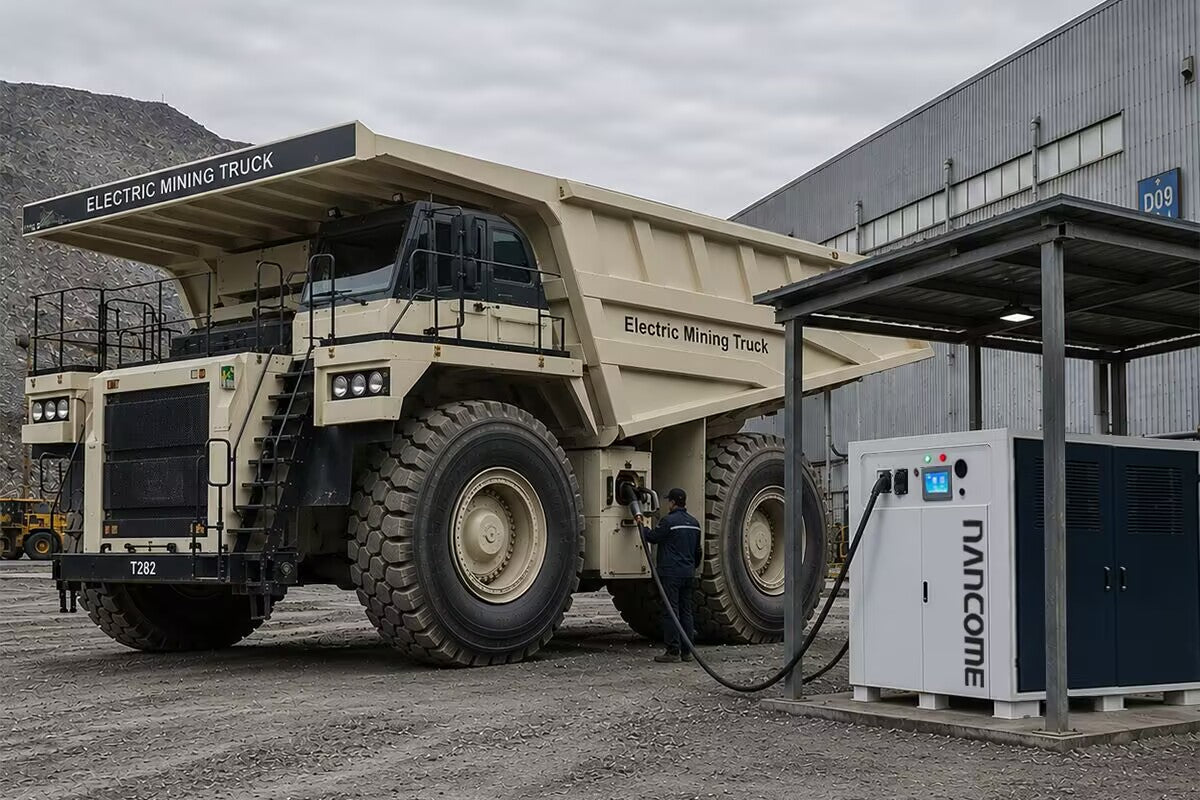
NANCOME’s product portfolio includes DC fast chargers, commercial AC chargers, portable DC chargers, high-power charging systems, and mobile energy storage charging systems. This allows project partners to choose different equipment combinations according to site conditions and business goals.
10) Solar EV Charger and Solar Charging Station Cost
A solar ev charger is often discussed as a way to reduce grid dependence and support cleaner charging. But in real projects, solar charging should be viewed as a system, not simply a charger connected to solar panels.
A solar ev charging station project may include PV panels, PV mounting structure, solar inverter, battery energy storage system, DC fast charger or AC charger, energy management system, grid connection, protection devices, site monitoring, installation, and commissioning.
IEA PVPS describes PV-powered charging stations as systems combining on-site solar electricity generation with EV charging infrastructure. Such systems can be grid-connected or off-grid, and they may integrate battery storage, intelligent energy management, V2G functions, or battery swapping depending on the project architecture.
Solar charging can be especially useful in places with high solar resources, limited grid capacity, high electricity prices, or demand for lower-carbon charging. However, it adds extra engineering work. The project must consider solar generation curve, vehicle charging demand, battery capacity, grid connection, and operating strategy.
This is why NANCOME’s mobile energy storage charging systems and DC charging systems can be valuable in solar-integrated projects. They help partners build charging solutions that are more flexible for commercial sites, fleet depots, industrial parks, remote areas, and temporary power-limited locations.
11) Construction, Commissioning and Platform Connection
Installation cost does not end when the charger is fixed to the ground. A commercial charging station needs proper commissioning before operation, including electrical testing, grounding inspection, communication setup, charger parameter configuration, connector testing, payment system testing, OCPP platform connection, load testing, emergency stop testing, operator training, and maintenance handover.
A charger that is installed but not properly commissioned may create problems later, such as unstable communication, payment failure, abnormal charging sessions, or difficult maintenance. For growing charging operators, platform connection is also important because remote monitoring, charging data, alarm records, billing, user management, and maintenance response can help reduce long-term operation cost.
This matches the idea of being a project-oriented charging solution partner, not just a hardware supplier. NANCOME can support customers before delivery with practical technical judgment related to site power conditions, charging power selection, protection coordination, communication integration, and deployment planning.
12) Where Charging Station Projects Usually Spend the Most Money
In many DC fast charging projects, the largest cost areas are usually charging equipment, transformer or grid upgrade, civil works and trenching, cables and electrical installation, distribution cabinet and protection system, labor and commissioning, site facilities such as canopy and lighting, and software platform or payment integration.
The exact ranking changes by project. If the site already has enough electrical capacity, equipment may be the largest cost. If the site needs a new transformer, grid upgrade may become the biggest cost. If chargers are far from the power room, cable and trenching may increase sharply. If the project includes solar and storage, PV panels, battery system, and energy management will become major cost items.
This is why a professional cost estimate should start with site conditions, not only product selection.
13) How to Control EV Charging Station Construction Cost
Cost control does not mean choosing the cheapest charger. It means reducing unnecessary project risk and avoiding wrong design decisions. Operators can control cost by selecting a site with better existing electrical capacity, reducing unnecessary cable distance, planning charger layout before civil construction, choosing power levels based on real vehicle demand, and using staged deployment when utilization is uncertain.
For example, a new ev charger station business may start with several 60kW, 120kW, or 180kW DC chargers, then expand after utilization data becomes clear. For high-traffic locations, a high-power charging system may be more suitable from the beginning.
NANCOME can support this decision process with flexible power configurations, multiple connector options, communication support, and customization for different markets.
14) Why NANCOME Is Suitable for Project-Based Charging Station Deployment
NANCOME’s value is not only in manufacturing charging equipment, but in connecting equipment with real project needs.
• As an intelligent EV charging equipment manufacturer, NANCOME develops and manufactures DC fast chargers, commercial AC chargers, portable DC chargers, high-power charging systems, and mobile energy storage charging systems for commercial, public, office, fleet, and mobile charging scenarios.
• As a manufacturer with electrical engineering roots, NANCOME integrates knowledge of power distribution, protection design, thermal management, and system safety into charging products.
• As a project-oriented charging solution partner, NANCOME evaluates charging as part of a larger power system and supports partners with practical technical judgment before delivery.
• As a flexible manufacturing partner, NANCOME can provide customization for charging standards, power configuration, language, communication requirements, brand identity, and installation methods while maintaining reliability and manufacturability.
This makes NANCOME suitable for overseas charging partners who need equipment that can match real site conditions, local market requirements, and long-term business operation.
Result
EV charging station construction cost is not only about the charger price. A complete project may include land, civil works, transformer, switchgear, cables, canopy, charging equipment, installation, commissioning, software connection, and long-term maintenance.
For investors and operators, understanding dc fast charger cost means understanding the full electrical and construction system behind the station. For an ev charger station business, the best project plan should balance equipment cost, grid capacity, user demand, charging speed, site layout, and future expansion.
For projects that require cleaner energy or limited-grid deployment, a solar ev charger or solar ev charging station project can be considered together with PV, battery storage, DC charging, and energy management.
NANCOME supports commercial charging projects with intelligent charging equipment, electrical manufacturing experience since 1992, project-oriented technical support, and flexible customization capability. From standard commercial DC fast chargers to high-power charging stations and mobile energy storage charging systems, NANCOME helps partners build charging infrastructure that fits real operating conditions.
FAQ
1.What is included in EV charging station construction cost?
It usually includes land or site use, civil works, transformer, distribution cabinet, cables, conduit, charging equipment, canopy, lighting, installation labor, commissioning, payment system, and maintenance preparation.
2. Why is dc fast charger cost higher than AC charger cost?
DC fast chargers require higher power capacity, larger cables, stronger protection design, more complex power electronics, cooling structure, communication control, and often transformer or grid upgrades.
3. Does every commercial charging station need a transformer?
Not always. If the existing electrical capacity is enough, a new transformer may not be needed. But many DC fast charging projects require transformer evaluation or upgrade, especially when multiple chargers operate at the same time.
4. Is a solar ev charger suitable for commercial charging stations?
Yes, but it depends on solar resources, charging time, site space, grid condition, and whether battery storage is included. Solar charging works better when planned as a complete PV + storage + charging system.
5. What affects the return of an ev charger station business?
The main factors include location, charger utilization, electricity price, charging service fee, equipment uptime, maintenance cost, payment convenience, parking policy, and future EV adoption in the local market.
6. Can NANCOME support solar ev charging station project planning?
Yes. NANCOME can provide DC charging systems, mobile energy storage charging systems, and project-oriented technical support for commercial charging, fleet charging, public charging, and solar-integrated charging scenarios.


Leave comment
所有评论在发布前都会经过审核。
此站点受 hCaptcha 保护,并且 hCaptcha 隐私政策和服务条款适用。