
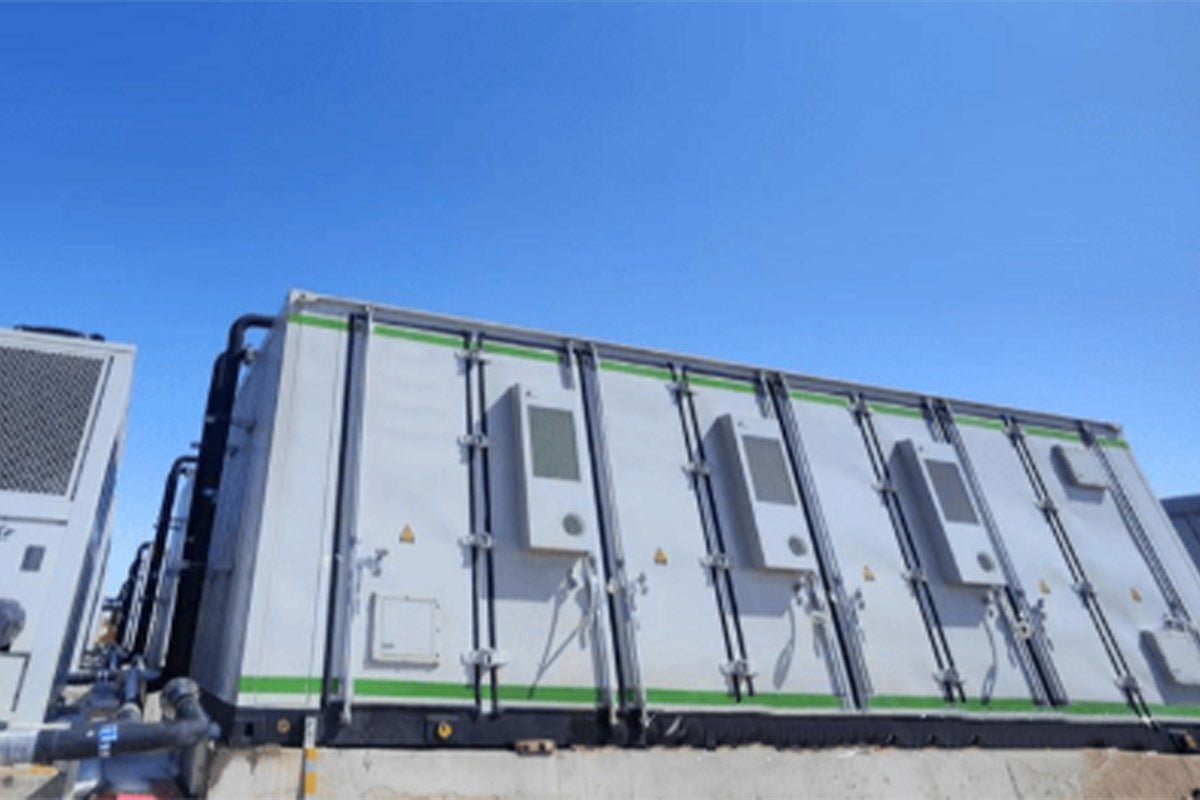
I don’t know when terms like “Medium-Voltage Direct Connection” and “High-Voltage Direct Connection” became so popular in the charging pile industry. A quick search shows they really are widely used now—this industry is quite fast at coining new terminology.
According to the power industry standard, voltages below 35 kV are classified as medium voltage. So calling it “high-voltage direct connection” doesn’t really make sense by that definition. These charging equipment manufacturers are basically confusing customers, making them believe in concepts that don’t actually align with established electrical engineering standards.
It should be noted that what we are discussing today is not charging technology based on PET (SST) — Power Electronic Transformer / Solid-State Transformer. In the EV charging industry, I have not personally seen any real deployment of SST-based charging systems.
I’m not sure when terms like Medium-Voltage Direct Connection and High-Voltage Direct Connection started being widely borrowed and reused in this industry for marketing hype.
According to power system standards, anything below 35 kV is classified as medium voltage, so calling it “high-voltage direct connection” is, strictly speaking, not technically accurate. Yet these charging equipment manufacturers present it in a way that easily misleads customers, making them believe it represents some kind of advanced high-voltage architecture.
High-Voltage Direct Connection (High-Voltage Direct Connection) / Medium-Voltage Direct Connection (Medium-Voltage Direct Connection) were originally terms used in the energy storage sector and have been in use for around a decade.
The core idea is to use a Modular Cascaded Power Electronic Topology to replace bulky Power-Frequency Transformers, achieving a shift from “Low-voltage battery/equipment → transformer → high-voltage grid” to “Low-voltage battery/equipment → high-voltage grid,” enabling an architectural innovation.
Those so-called “High-Voltage Direct Connection” systems in the industry—whether they integrate a Power-Frequency Transformer and rectification stage into a single cabinet or container—are essentially marketing packaging.
Whether it is a 35/10 kV → 0.4 kV → 750/800 V DC system, or even a 110 kV → 0.4 kV → charging system, many of these claims in the industry are fundamentally misleading. In reality, most of them are just hype riding on the SST (Solid-State Transformer / PET, Power Electronic Transformer) narrative.
The common trick being used is actually a combination of a Phase-Shifting Transformer + rectifier stage + DC/DC charging modules. A Phase-Shifting Transformer is still a type of Power-Frequency Transformer, yet it is being presented as something more advanced.
What is happening here is essentially borrowing concepts from data center architectures such as the “Panama Power System” to create the illusion of technological advancement and confuse the market.
Data centers use the Panama Power System, which is developed from High-Voltage DC (HVDC 240/336V) architectures. Its ultimate goal is efficiency improvement—by eliminating UPS systems—to simplify power delivery chains and reduce equipment footprint, including the removal of Medium-Voltage Switchgear and AC Distribution Cabinets, and in some cases, Power Quality Cabinets where conditions allow.
Through this, overall data center power density is increased and PUE is reduced. This is precisely the origin of the term “Panama Power System.”
From the pilot project launched by Delta Electronics in 2009 to its official joint rollout with Alibaba in 2019, the development process spanned approximately 10 years.
Everyone knows that the main players in data center construction are the three major telecom operators, internet companies, and operations & maintenance providers (such as Century Internet / VNET Group). However, the real large-scale adopter of the Panama Power System is actually internet companies. In contrast, the three major telecom operators account for a relatively smaller share.
If you look back at the past 10 years, the deployment of DC distribution cabinets (240/336) by the three major telecom operators has been very limited. These “old conservatives” have clearly been taking a steady and cautious approach. Even in today’s booming AIDC (AI Data Center) era, their pace of adoption is still not as fast as many people might expect.
From a so-called “direct connection verification report” I obtained from the market, these so-called “super charging stations” are essentially being validated through evaluation reports used as a basis for issuing test certificates.
In addition, I found that the testing standards applied are almost entirely based on power system standards and EV charging standards. However, I did not see any EMC (Electromagnetic Compatibility) testing included.
In practical deployment, this type of transformer-based solution still has implementation issues, and in many cases, additional costs or “facilitation expenses” are required to push projects through.
In the previous discussion, what is commonly referred to in the market as “direct connection” is in fact almost always a combination of a Phase-Shifting Transformer (or Power-Frequency Transformer) + AC/DC conversion stage (ACDC) + DC/DC conversion stage (DCDC).
The AC/DC stage can sometimes be implemented as a single-stage topology (single-stage ACDC converter), and it is typically scaled up to around 200 kW in practical designs.
In addition, there are also market efforts looking for AC/DC solutions that can support 690 Vac input.
If this kind of architecture can already be called “direct connection”, then companies like Huawei and BYD would be “leading” the industry by many years already.
If one is overly obsessed with the so-called “direct connection” concept, there is actually no need to use a Phase-Shifting Transformer. One could simply use a conventional Power-Frequency Transformer + AC/DC stage (ACDC, single-stage PWM fully controlled rectifier topology) + DC bus + DC/DC stage (DCDC, isolated charging module). This kind of front-end architecture has already been used long ago in large-scale hydrogen production power supplies.
So remember this: if the system does not eliminate the Power-Frequency Transformer, then calling it “true direct connection” is just misleading marketing—essentially a fake form of “direct connection”.

Leave comment
所有评论在发布前都会经过审核。
此站点受 hCaptcha 保护,并且 hCaptcha 隐私政策和服务条款适用。