
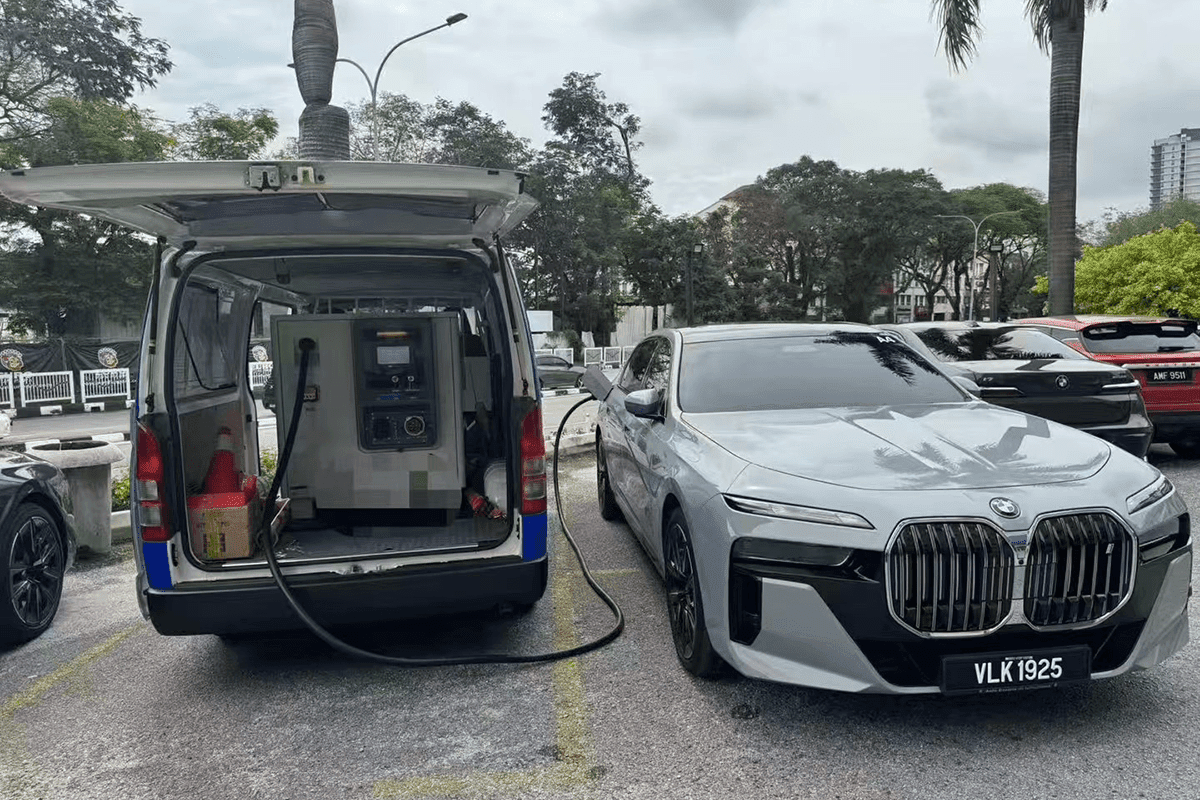
A real-world service model built on customer field feedback (with photos)
As EV adoption grows, a common bottleneck is not ‘how many fixed charging sites exist’, but ‘how fast you can deliver energy to the vehicle when it is stranded or parked far from a charger’. For rental operators, fleets, insurers, and roadside assistance teams, a door-to-door EV charging service and a roadside EV charging rescue service can be faster to monetize than building a new fixed station—because deployment is flexible and the response time is the product.
This article turns two customer feedback scenes into a practical deployment plan using a mobile energy storage charging station (a van-mounted unit). The system is a battery-integrated DC fast charger that can deliver DC power without relying on the local grid at the point of service, then recharge later at an approved location.
Where interoperability matters, we design the operations layer around open standards such as OCPP and vehicle charging interfaces such as IEC 61851 and ISO 15118. Readers can cross-check these standards through the Open Charge Alliance page (https://openchargealliance.org/protocols/open-charge-point-protocol/), the IEC catalogue search for IEC 61851 (https://webstore.iec.ch/searchform?q=IEC%2061851), and the ISO page for ISO 15118 (https://www.iso.org/standard/55366.html).
1) Customer field feedback: two ‘must-have’ scenarios

Figure 1 | Door-to-door power delivery: the van arrives, connects, and provides DC charging at the customer location.
Scenario A — Door-to-door power delivery: Ideal when the EV is parked in a closed parking lot, hotel/condo garage, campus, rental depot, or any location where a fixed charger is unavailable. The goal is simple: restore ‘drivable range’ quickly and reduce towing.

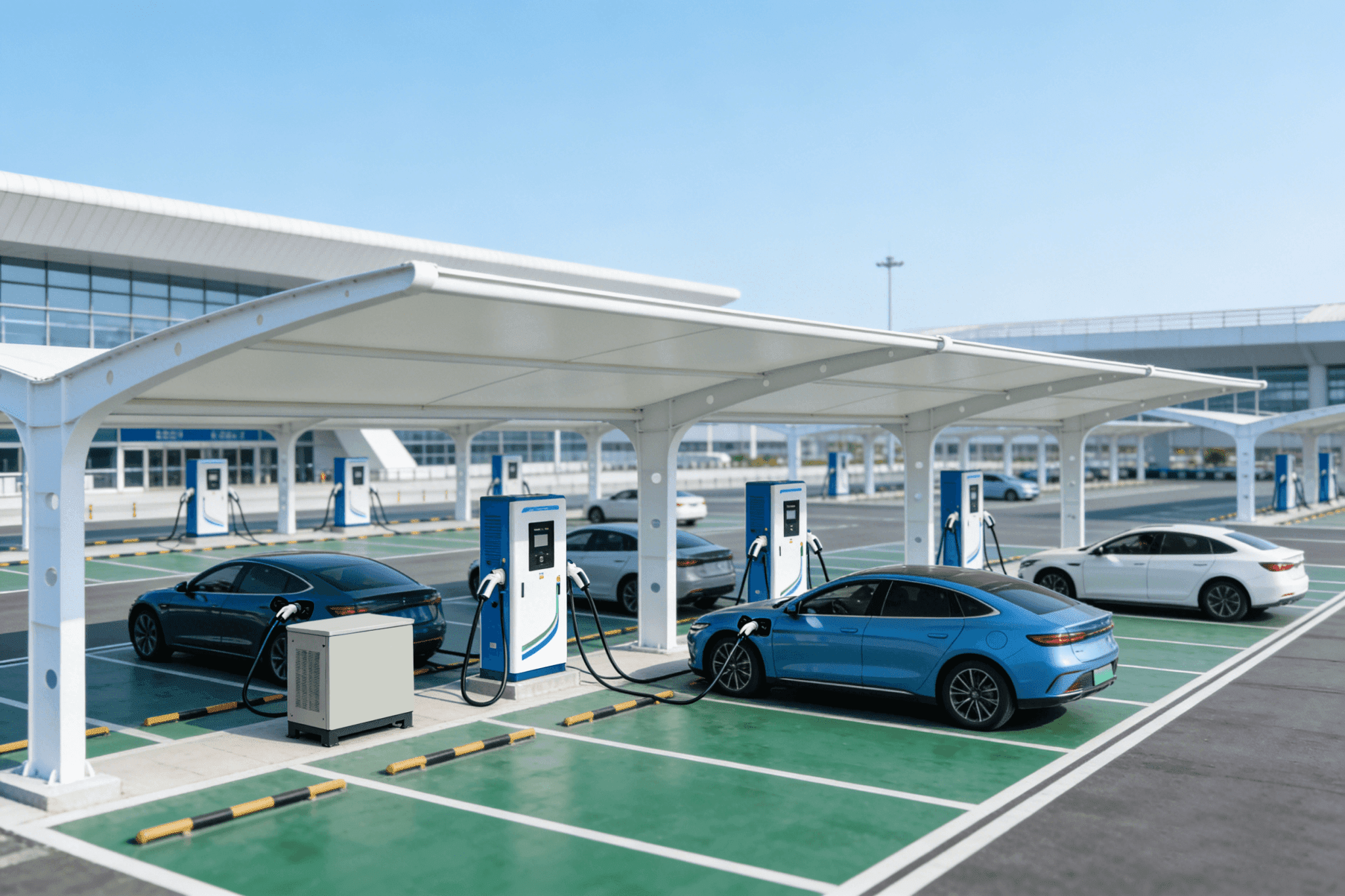
Figure 2 | Roadside rescue charging: rapid DC top-up to get the vehicle safely moving to the nearest charger or destination.
Scenario B — Roadside rescue charging: When an EV reaches a critically low state-of-charge and cannot safely leave the roadside, a van-mounted DC fast charging solution can deliver an emergency top-up on site. This replaces many ‘tow-first’ calls with ‘charge-first’ calls—often cheaper, faster, and better for customer satisfaction.
2) Why mobile energy storage can outperform fixed sites for rescue & on-demand demand
Fixed stations are a long-game: site selection, permitting, civil work, transformer capacity, and grid upgrade timelines. In contrast, on-demand EV charging support is an operations business: dispatch speed, service radius, and repeatable SOPs.
A mobile DC fast charging power bank creates value because it ‘brings the energy to the vehicle’. It is a form of battery-buffered DC fast charging: the on-board battery supplies the peak power during service, while the unit can recharge later from the grid (or another approved source) when time allows.
For EV charging business planning and infrastructure fundamentals, you can also reference the U.S. DOE Alternative Fuels Data Center (AFDC): https://afdc.energy.gov/fuels/electricity and NREL’s transportation electrification research landing page: https://www.nrel.gov/transportation/.
3) Solution blueprint: hardware, safety, and backend operations
3.1 Hardware configuration (right-size the system)
We recommend selecting the mobile system by service intensity rather than by maximum nameplate power. For many rescue jobs, the target is not ‘charge to 100%’, but ‘add enough energy to drive safely to a nearby charger’.
Typical selection logic:
Pilot / light-duty rescue: lower upfront investment, fast payback, suitable for city coverage and rental depots.
· High-frequency roadside assistance: higher daily job count, fewer recharging stops, faster turnover per call.
· Fleet + depot hybrid: supports both emergency calls and scheduled depot top-ups for fleet roadside charging support.
Our platform uses a LiFePO4 energy storage charger architecture with multiple capacity options, so the same service model can scale from trial deployment to multi-van operations.
3.2 Safety & reliability (how to avoid ‘field failure’)
Roadside work is not a lab environment. The system must be predictable under heat, dust, and frequent connect/disconnect cycles. A production-ready mobile energy storage charging station should include BMS protection and layered safety functions (over-voltage, over-current, over-temperature, short-circuit, reverse polarity prevention, and insulation monitoring where applicable).
Thermal management and derating logic are essential: when conditions approach limits, the system protects itself and keeps charging steadily, instead of stopping abruptly and creating a second rescue problem.
3.3 Backend: dispatch, billing, and remote operations
To turn equipment into a service, we recommend a dispatch-and-billing backend with clear job records (time, location, kWh delivered, and device status). When required, OCPP remote monitoring and operations can be used to integrate device status, alarms, and session records into the customer’s CSMS.
4) A simple SOP that customers can copy-and-paste into their service handbook
1. Intake location: collect location, vehicle model, and estimated remaining SOC (or app-based data if available).
2. Dispatch: select the nearest van based on SOC, distance, and expected energy needed.
3. On-site safety check: confirm parking safety, cable routing, and vehicle readiness; if unsafe, relocate first.
4. Emergency charging: prioritize ‘drivable range’ rather than full charge; keep turnaround time short.
5. Close-out payment: charge service fee + energy fee; generate a job record automatically.
6. Review optimize: analyze hotspots, time-of-day demand, and average kWh per job to refine deployment.
5) What we deliver (solution + drawings + support)
We position this offer as an EV rescue charging business model, not a single device sale. Depending on project scope, we can support:
·Model selection based on service radius, daily job count, and recharge logistics
· Documentation pack: operating SOP, risk notes, troubleshooting checklist, and maintenance schedule
· Remote technical support: diagnostics, parameter guidance, and onboarding to the customer backend
· Customization options: logo, language, communication interfaces, and platform integration approach (project-based)
6) Closing: the easiest ‘next step’ for a new operator
If your customer is new to the EV service market, a single van deployment is often the lowest-risk starting point. It validates demand, pricing, and dispatch operations before expanding to multiple vans or fixed sites. In short: start small, learn fast, and scale the fleet when the numbers prove it.
References (traceable sources)
• Open Charge Alliance – OCPP: https://openchargealliance.org/protocols/open-charge-point-protocol/
• IEC catalogue search – IEC 61851: https://webstore.iec.ch/searchform?q=IEC%2061851
• ISO – ISO 15118 page: https://www.iso.org/standard/55366.html
• U.S. DOE AFDC – Electricity (EV charging): https://afdc.energy.gov/fuels/electricity
• NREL – Transportation electrification research: https://www.nrel.gov/transportation/

Leave a comment
All comments are moderated before being published.
This site is protected by hCaptcha and the hCaptcha Privacy Policy and Terms of Service apply.