
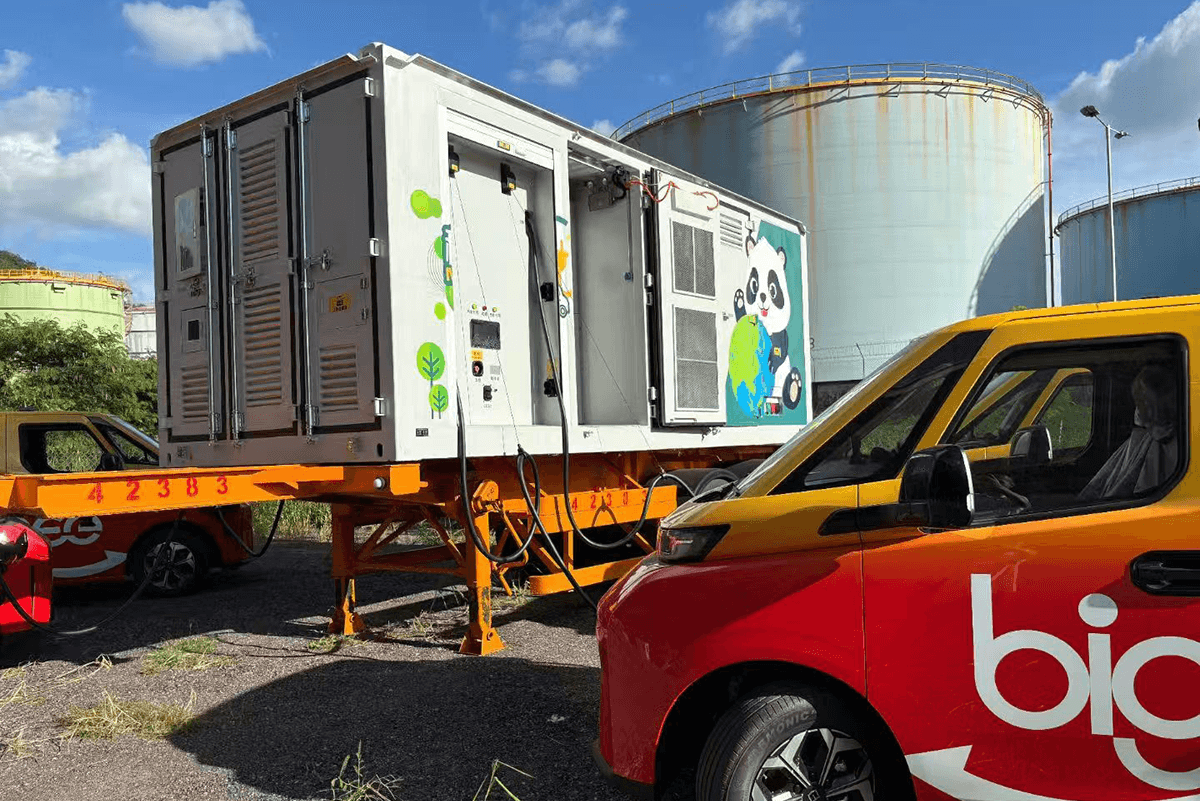
When EV charging demand grows faster than grid upgrades, the most profitable stations are often the ones that can deploy capacity first and optimize later. This case shows a 1000kWh energy storage charging station configured with a 4-gun DC fast charger totaling 480kW , using liquid-cooled charging technology to support high-throughput operation.
Unlike “concept diagrams,” the photos below reflect a real deployment format that operators use when they need fast commissioning, flexible placement, and strong throughput—especially for fleet operations, temporary charging hubs, and scenarios where the grid connection is limited or slow to expand.
Figure 1 (Case Photo):1000kWh energy storage charging station in a transportable configuration (truck-mounted deployment).

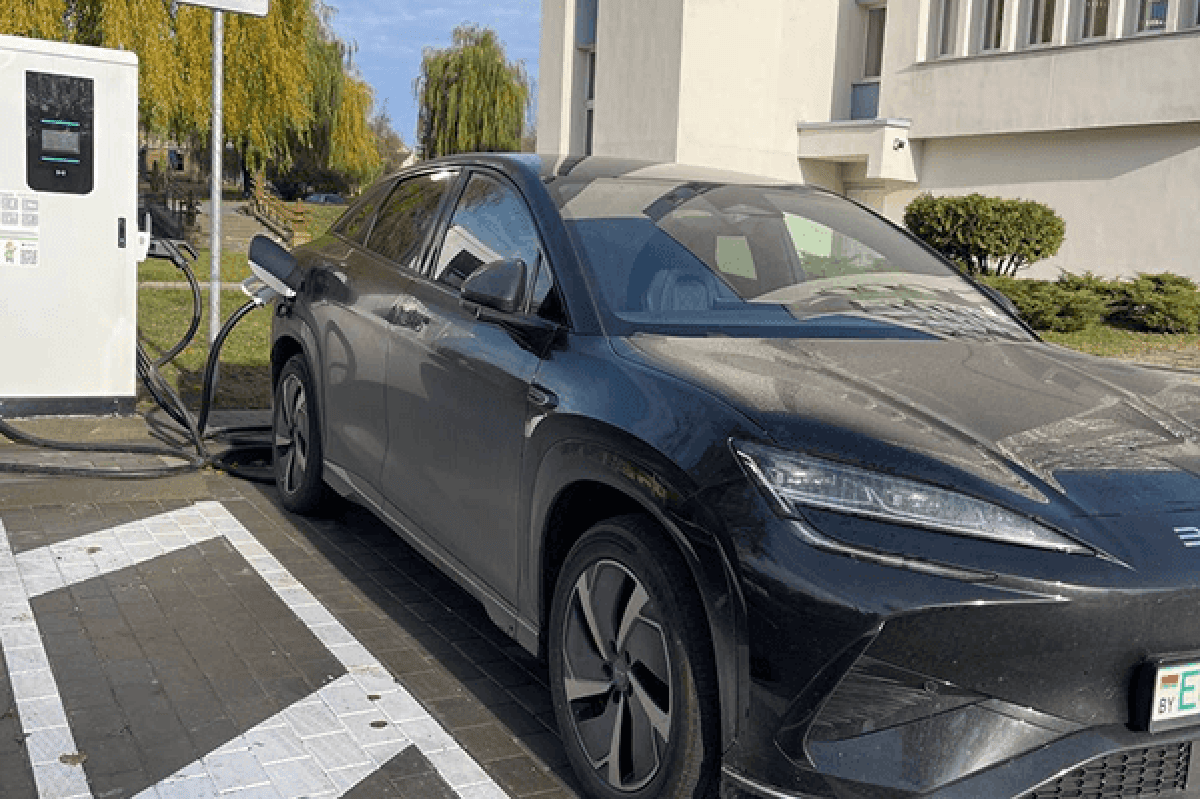
Figure 2 (Case Photo): 1000kWh energy storage charging station charging EVs on-site with multiple charging outputs (4-gun / 480kW total).

What This Configuration Is Designed to Solve
A station built as a battery-buffered DC fast charging site is typically used to solve one (or several) of the following commercial problems:
1. High demand arrives first, grid expansion arrives later
Some sites experience immediate queueing after launch. Adding more chargers becomes difficult when transformer/utility capacity cannot expand quickly. A large ESS makes it possible to add practical charging throughput sooner, then refine the permanent plan using real utilization data.
2. High throughput requirements (fleet or high-turnover public charging)
Fleets and busy corridors care about “vehicles served per day,” not just nameplate charger power. Multiple charging outputs—paired with energy storage—helps maintain service capacity during peak windows.
3. Rapid deployment where civil works or approvals are time-consuming
Transportable or containerized formats shorten deployment cycles and make relocation feasible for pilots, temporary charging services, emergency operations, and construction-phase needs.
Why “1000kWh + 480kW (4 Guns)” Is a Practical Pairing
A 480kW total DC output allows the station to support multiple vehicles and improve queue handling. The 1000kWh storage capacity provides meaningful energy buffering so the station can deliver high power during peak periods—even when the site’s grid import limit is lower than the charger’s rated output.
In many markets, energy storage systems are evaluated against recognized safety frameworks such as UL 9540 , which treats the ESS as a complete system (battery + power conversion + protective functions). (webstore.ansi.org:
https://webstore.ansi.org/standards/ul/ansiul95402023?utm_source=chatgpt.com)
Why Liquid-Cooled Charging Cables Are Used in This Case
For high-output charging—especially where multiple connectors are involved— liquid-cooled DC charging cables are often selected to improve operational comfort and thermal stability. In simple terms:
• liquid cooling helps manage heat at higher current levels,
• cable handling can be easier compared with very thick air-cooled cables at similar current,
• sustained charging sessions become more stable in warm climates or high-duty environments.
This is particularly relevant for commercial sites where chargers may run continuously across a day, not just for occasional sessions.
Station Architecture in Plain Language
This type of site typically combines four core layers:
1. Energy Storage System (ESS)
Stores energy and releases it when the site needs peak output.
2. Power Conversion & Control
Regulates energy flow, coordinates safety logic, and manages charging behavior.
3. DC Fast Charging System
Provides the charging output (here: 4 guns, 480kW total) and manages connector-level power distribution.
4. Monitoring & Data (Operations Layer)
Commercial operators rely on uptime and service workflows. Remote monitoring is commonly implemented through OCPP , which provides a standardized communication method between charge points and central systems. (openchargealliance.org: https://openchargealliance.org/protocols/open-charge-point-protocol/?utm_source=chatgpt.com)
On the charging equipment side, many deployments reference IEC 61851-1 as a core standard for conductive charging system requirements and equipment safety scope. (webstore.iec.ch: https://webstore.iec.ch/en/publication/33644?utm_source=chatgpt.com)
Safety & Grid-Parallel Notes (Project-Based)
Every country has its own inspection pathway, but the safety logic is consistent: fault isolation, early abnormal detection, and controlled shutdown behavior.
• ESS system-level safety context: UL 9540 describes system-level considerations and how an ESS is evaluated as an integrated system. (webstore.ansi.org: https://webstore.ansi.org/standards/ul/ansiul95402023?utm_source=chatgpt.com)
• If the site operates grid-parallel (depending on local design and permitting), interconnection and interoperability considerations can apply. IEEE 1547 is a widely referenced interconnection standard for distributed energy resources. (standards.ieee.org: https://standards.ieee.org/standard/1547-2018/?utm_source=chatgpt.com)
(Important note for website clarity: compliance requirements differ by country and project type; final compliance scope should be confirmed during engineering and permitting.)
Where This Case-Type Solution Fits Best
A 1000kWh battery-buffered station with multi-output high power is most attractive where time-to-service and throughput directly impact revenue or operations:
• Logistics parks and fleet depots (predictable charging demand, high daily turnover)
• Emergency or temporary charging hubs (disaster recovery, construction phase, event support)
• High-traffic charging sites facing queue pressure and delayed grid expansion
• Remote or semi-remote operations where civil work and utility upgrades are slow
Deployment Checklist (What Engineering Teams Confirm First)
To turn a case like this into a reliable project, teams typically confirm:
1. Expected daily energy demand (vehicles/day, kWh/day)
2. Vehicle mix and likely charging patterns (peak windows vs distributed demand)
3. Space and access: clearance, placement, cable routing, and serviceability
4. Operating mode: storage-only buffering vs grid-assisted vs grid-parallel (country-specific)
5. Remote monitoring workflow: alarms, reporting, service response time, spare parts
Summary: The Business Value of This Case
This case demonstrates a practical approach to delivering high-throughput DC fast charging using a 1000kWh energy storage charging station and a 4-gun 480kW liquid-cooled DC fast charging configuration The key advantage is simple: it helps sites deliver charging capacity when demand is already present—without waiting for long grid expansion timelines—while maintaining an operator-friendly path to monitoring, service, and future optimization.
References (Traceable)
• UL 9540 (Energy Storage Systems and Equipment) — ANSI Webstore. (webstore.ansi.org: https://webstore.ansi.org/standards/ul/ansiul95402023?utm_source=chatgpt.com)
• Open Charge Point Protocol (OCPP) — Open Charge Alliance. (openchargealliance.org: https://openchargealliance.org/protocols/open-charge-point-protocol/?utm_source=chatgpt.com)
• IEC 61851-1 (EV conductive charging system — general requirements) — IEC Webstore entry. (webstore.iec.ch: https://webstore.iec.ch/en/publication/33644?utm_source=chatgpt.com)
• IEEE 1547-2018 (Interconnection and interoperability of DER) — IEEE Standards Association overview. (standards.ieee.org: https://standards.ieee.org/standard/1547-2018/?utm_source=chatgpt.com)

Deixar comentário
Os comentários precisam ser aprovados antes da publicação.
Este site é protegido por hCaptcha e a Política de privacidade e os Termos de serviço do hCaptcha se aplicam.