
A practical blueprint for building a reliable, maintainable on-grid charging station with PV canopy, distribution cabinets, and user amenities
In many markets, the fastest path to a bankable charging site is not always a battery-backed microgrid. A well-engineered grid-tied solar carport EV charging station can deliver stable service, simpler compliance, and predictable expansion—while still capturing on-site PV self-consumption during daytime hours.
This article explains a real project-style site using two on-site photos as references. The site combines PV canopy parking, multiple chargers, fenced electrical zones (distribution + transformer area), and a driver lounge with seating, air conditioning, and an automated vending machine. That mix is practical: it supports usability, improves dwell-time experience, and increases repeat visits—especially in high-frequency driver groups.
On the standards and interoperability side, many commercial operators align charger back-end integration with open protocols such as OCPP (see Open Charge Alliance overview in Reference [1]) and design charging equipment around recognized conductive charging system requirements (see IEC 61851 entry in Reference [2]). These references help newcomers understand why “site design + operations” matters as much as the charger itself.
1) What the photos show: PV canopy + chargers + the electrical core
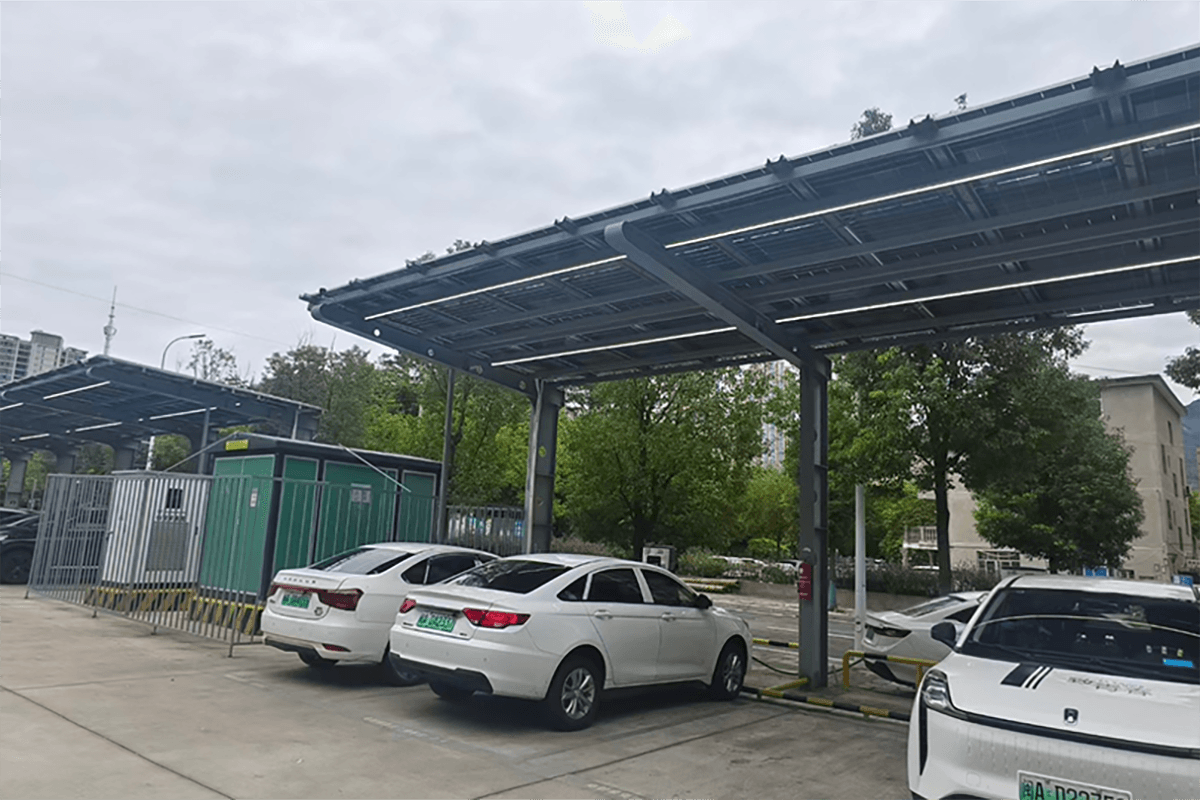
Figure 1 | PV canopy with parking-bay charging
PV solar canopy charging bays at a grid-tied EV charging site (no battery storage).
This photo highlights the front-end of solar carport EV charging infrastructure: PV canopy structures above parking bays, with chargers placed for easy access and clear vehicle flow.
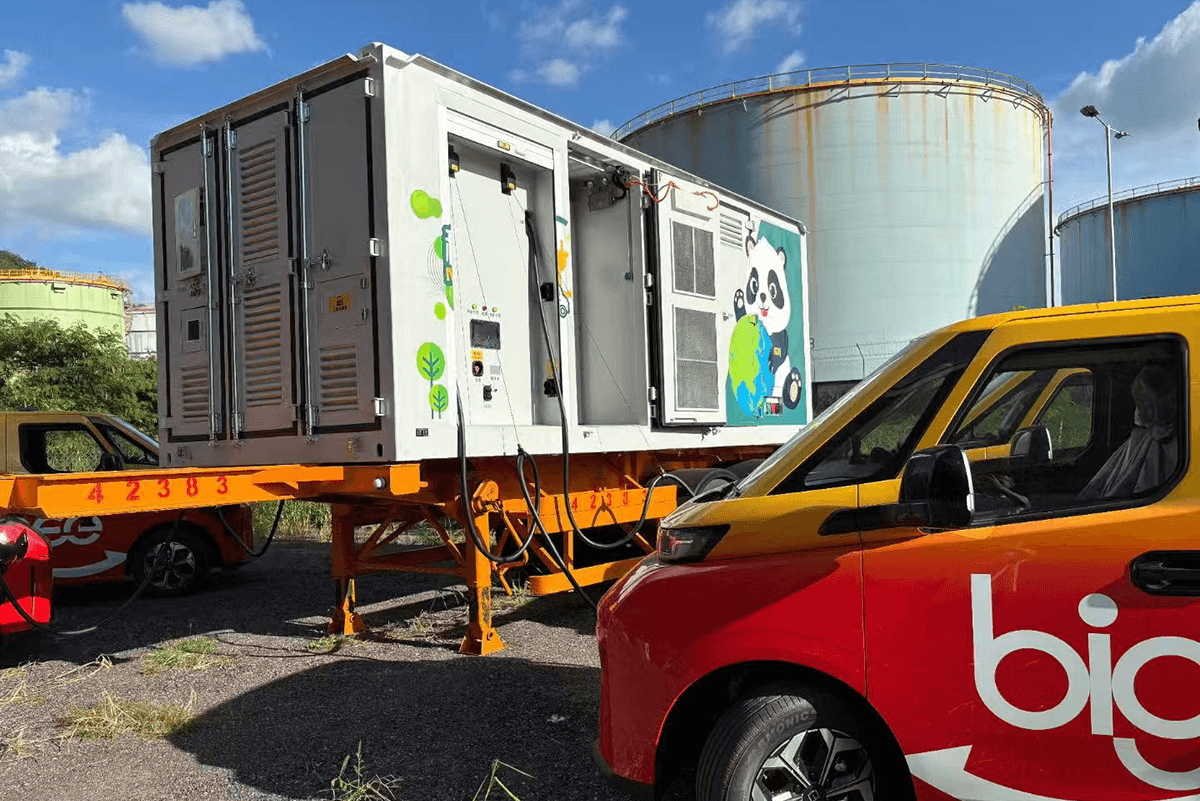
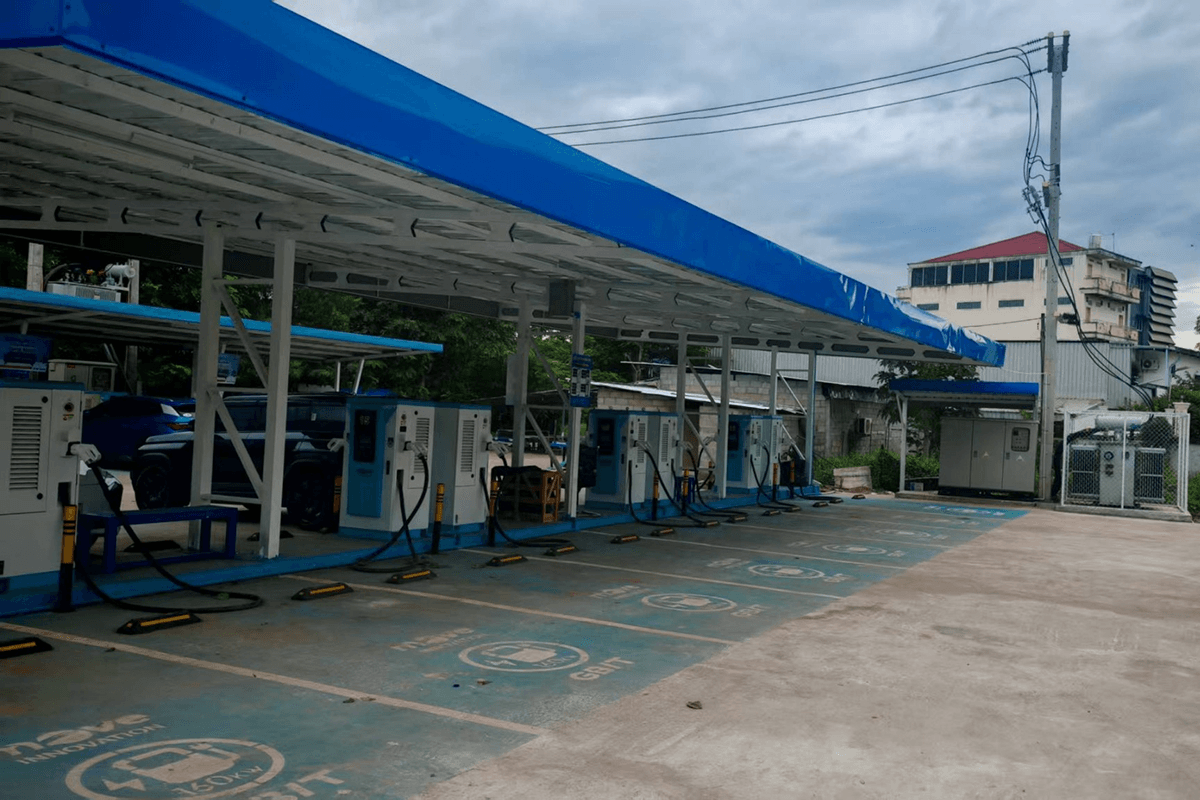
Figure 2 | Fenced electrical zone: distribution cabinets + transformer/box substation area

Fenced MV/LV electrical zone with distribution cabinets and containerized substation equipment for an EV charging site.
This photo shows the “heart” of the station: safety separation, protection devices, and centralized power routing. In many commercial builds, this is where a prefabricated substation (box transformer) for EV charging and an MV/LV distribution cabinet for EV charging site are installed to feed chargers, lighting, and auxiliary loads.
Together, these two areas form a complete on-grid EV charging station architecture: user-facing charging bays under a PV canopy, supported by a secure electrical core designed for uptime, compliance, and maintainability.
2) What this site is (and what it is not): on-grid, no battery storage
This is a PV carport charging station without battery storage. The operating logic is simple:
·When PV generation is available, part of the energy is consumed on site by chargers and auxiliary loads.
·When PV is insufficient (cloudy weather or nighttime), the grid supplies the remaining demand so charging continues normally.
·Protection, safe isolation, and power distribution are handled by the site’s electrical design and equipment.
For many first-phase deployments, this “PV + grid” structure reduces integration complexity while still providing a meaningful PV contribution.
3) How power flows: from PV canopy to the EV
3.1 PV canopy: generation + user experience
PV canopies create electricity and improve station usability (shade, rain cover, better user comfort). But reliability depends on practical O&M planning—inspection access, cleaning, and fault response. The IEA PVPS O&M guideline in Reference [3] provides a useful framework for PV system operation and maintenance that site owners can adapt.
3.2 Electrical core: interconnection, protection, and distribution
The fenced electrical zone is where “engineering” becomes “bankability.” A good charging station power distribution design typically includes:
·clear feeder separation (chargers vs. lighting vs. building loads)
·protection coordination and safe isolation
·grounded and labeled cable routing
·future expansion provisions (spare ways, cable paths, reserved capacity)
For efficient approvals and construction, engineering teams usually provide a drawing package such as a one-line diagram for EV charging station, cabinet layouts, circuit schedules, cable lists, grounding concept notes, and commissioning checklists. This is why customers often prefer a supplier that can deliver an integrated EV charging site solution and drawings rather than “chargers only.”
3.3 Chargers + back-end operations
Chargers deliver the service; the back end protects uptime. When required, an OCPP-based charging station management system (CSMS) enables remote monitoring, session records, alarms, and maintenance workflows (see OCPP overview in Reference [1]). This becomes increasingly important as the site scales or as multiple sites need centralized operations.
4) Why “no storage” can be a smart first step
Not every site benefits from battery storage on day one. Many commercial parking and urban locations prefer a grid-tied approach because it offers:
·Lower CAPEX: no battery system cost and fewer battery-specific safety requirements
·Faster deployment: fewer subsystems and simpler commissioning
·Simpler maintenance: focus on PV + distribution + chargers
·Clear expansion path: add chargers, upgrade transformer capacity, or add storage later after utilization is proven
For an easy-to-read public primer on EV charging infrastructure basics, the U.S. DOE AFDC resource in Reference [4] is a practical starting point.
5) Driver lounge: small facility, big ROI impact
A charging site is also a dwell-time business. Adding driver lounge amenities at EV charging station —air conditioning, seating, and a vending machine—improves customer satisfaction and makes the site a “preferred stop.” For fleets, taxi/ride-hailing, and delivery drivers who charge frequently, comfort and predictability can materially increase repeat usage.
6) What a one-stop supplier can deliver for this type of site
For projects like this, customers typically want a complete delivery package rather than separated vendors. A one-stop delivery can include:
·Site concept sizing (charger count, PV canopy approach, transformer capacity assumptions, expansion planning)
·Engineering drawings (one-line diagram, cabinet layouts, circuit schedules, cable lists, grounding concept, commissioning documents)
·Equipment supply (chargers + distribution cabinets/switchboards + protection devices; project-based PV integration support)
·Operations enablement (remote monitoring strategy, alarm workflow, platform integration guidance—OCPP if required)
This reduces project risk and shortens time-to-operation.
7) Quick checklist for replicating this model
1) Target traffic and predictable utilization
2) Grid availability: transformer capacity and feeder limits
3) Electrical design: zoning, protection coordination, spare ways for expansion
4) PV canopy: structural design, drainage, inspection/cleaning access
5) User experience: signage, lighting, weather cover, driver lounge facilities
6) Operations readiness: session data, alarms, maintenance workflow (OCPP if needed)
References (traceable)
[1] Open Charge Alliance – OCPP overview: https://openchargealliance.org/protocols/open-charge-point-protocol/
[2] IEC 61851-1 publication entry: https://webstore.iec.ch/en/publication/33644
[3] IEA PVPS – O&M Guidelines for Photovoltaic Systems: https://iea-pvps.org/wp-content/uploads/2022/11/IEA-PVPS-Report-T13-25-2022-OandM-Guidelines.pdf
[4] U.S. DOE AFDC – Electricity (EV charging basics): https://afdc.energy.gov/fuels/electricity

Deixar comentário
Os comentários precisam ser aprovados antes da publicação.
Este site é protegido por hCaptcha e a Política de privacidade e os Termos de serviço do hCaptcha se aplicam.