

Part 1: Status of Outdated Chargers
Waste of Resources Behind Prosperity Data
China’s charging infrastructure has achieved significant progress in terms of total scale, but the problem of aging charging piles is becoming increasingly prominent:
1.Widespread “dead charger” phenomenon
A survey in a provincial capital in Northern China shows that, among 20 public charging stations, 6 are completely unusable and 4 suffer from severely insufficient power output. Only 10 stations are able to provide normal service. Among the 60kW DC fast chargers installed between 2018 and 2020, more than 35% have been idled due to outdated technology, falling into an awkward situation of being “too costly to remove, yet unusable in practice.”
2. Severe mismatch between efficiency and demand Traditional 60kW charging piles
require 1.5 hours to fully charge a 70kWh battery, while the driving range of new energy vehicles has generally exceeded 600km, creating a sharp contradiction in efficiency. A logistics park survey shows that outdated equipment causes drivers to lose 2.3 hours of operating time per day, resulting in an 18% increase in transportation costs.
3. Severe regional imbalance in development
In core areas of top-tier cities, the availability rate of charging piles exceeds 85%, while in third- and fourth-tier cities as well as township areas it is below 50%. Conditions are even worse along highway service areas. In one eastern province, charging facilities in 23 service areas have been in a long-term state of “partial paralysis.”
Part 2: Policy-driven Momentum
Dual-track approach of mandatory upgrades and subsidy incentives
At the national level, China is accelerating the elimination of outdated charging piles through a combination of policy measures:
1.Upgrading technical standards
The “Implementation Plan for Large-scale Equipment Renewal in Key Energy Fields” requires the elimination of inefficient charging piles below 50kW by the end of 2026. For new public charging piles built in 2025, DC chargers must account for more than 60%, and ultra-fast chargers above 200kW must account for no less than 30%.
2. Fiscal subsidy support
The state has established a 2 billion yuan special renovation fund, providing a subsidy of 300 yuan per kW for the construction of ultra-fast charging stations. Local policies are further strengthening incentives: Shanghai offers a subsidy of 600 yuan per kW for DC charging piles, while Chengdu subsidizes 30% of the construction cost for battery-swapping stations.
3. Mandatory installation requirements
New residential communities must be equipped with charging piles at a ratio of 1:1.5, and renovated older residential areas must reserve installation conditions. Charging pile coverage in highway service areas must reach 100%, with fast-charging piles accounting for no less than 60%.
Part 3: Technology Revolution
Breakthroughs in ultra-fast charging, intelligence, and energy storage
Charging technology is undergoing a generational leap, providing technical support for industry-wide upgrades:
1. Liquid-cooled ultra-fast charging technology
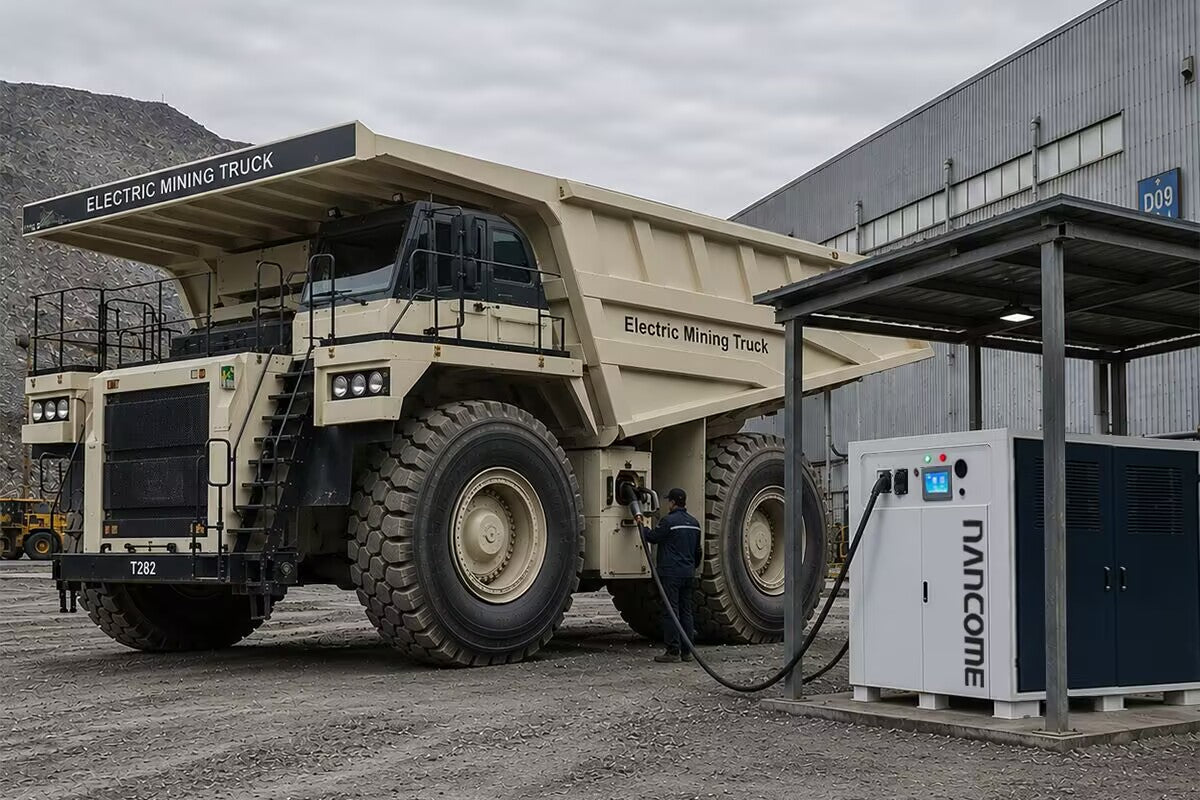
The 600kW fully liquid-cooled charging pile used in Nancome`s Supercharging achieves a charging rate of “1 km per second”, enabling 600 km of range in 10 minutes. The cable weight is reduced by 66% (down to 1.8 kg), and the operating temperature range is extended to -30°C to 55°C.
2. Intelligent operation and maintenance
AIoT systems achieve a 99.2% equipment availability rate, and 87% of faults are resolved through silent repair enabled by digital twin technology. Charging robots enable millisecond-level precision plug-in and unplug operations within 0.6 seconds, with a single unit capable of covering six standard parking spaces.
3. Integrated solar-storage-charging systems
More than 200 solar-storage-charging projects have been implemented nationwide, improving overall energy utilization efficiency by 40%. The “Solar-Storage Intelligent Inspection Supercharging Station” in Shanghai has been selected as a typical case for transportation energy conservation and emission reduction.
Part 4: Market Opportunity
A trillion-level blue ocean of upgrades waiting to be tapped
The elimination of outdated charging piles is creating a massive market opportunity:
1. Equipment upgrade demand
3 million aging AC charging piles urgently require retrofitting, creating new industrial opportunities. By the end of 2027, China aims to have more than 100,000 high-power charging facilities nationwide.
2. Innovation in operating models
Top-tier operators such as TELD and Star Charge account for over 35% of market share, driving industry consolidation. New models such as “charging + property management” and “charging + retail” are emerging, improving per-pile revenue.
3. Diverging user structure
Ride-hailing drivers account for 35%–40% of public charging pile users, with an average monthly electricity consumption of 7,039 kWh per pile. Private car owners without home charging heavily rely on off-peak nighttime electricity (0.385 yuan/kWh), accounting for 65% of usage.
Part 5: Outlook for the Future
From infrastructure to an energy ecosystem
The charging pile industry is transforming from a single energy-supply infrastructure into a smart energy node:
1. Vehicle-to-grid interaction (V2G)
Beijing provides a subsidy of 300 yuan per kW for V2G charging piles, with an additional 30% subsidy increase for projects in urban sub-centers. Electric vehicles are participating in electricity market transactions as distributed energy storage units.
2. Improvement of the standards system
Starting from March 2025, charging piles have been included in the Compulsory Product Certification (3C certification) system. A standardized framework covering multiple technological pathways—such as conductive charging, wireless charging, and battery swapping—has been established.
3. Rise of county-level markets
Sichuan Province plans for charging piles in rural areas to account for more than 60% by 2025. The Ministry of Finance supports 75 counties in carrying out pilot projects to address shortcomings in charging and battery-swapping infrastructure.
With accelerating technological iteration and continued policy support, China’s charging infrastructure will complete a qualitative leap from “having chargers available” to “having high-quality, easy-to-use chargers,” providing solid support for the widespread adoption of new energy vehicles.
Industry players need to seize this window of renewal and achieve breakthroughs in technology R&D, operating models, and ecosystem development to embrace the upcoming golden growth period.

Leave a comment
All comments are moderated before being published.
This site is protected by hCaptcha and the hCaptcha Privacy Policy and Terms of Service apply.