
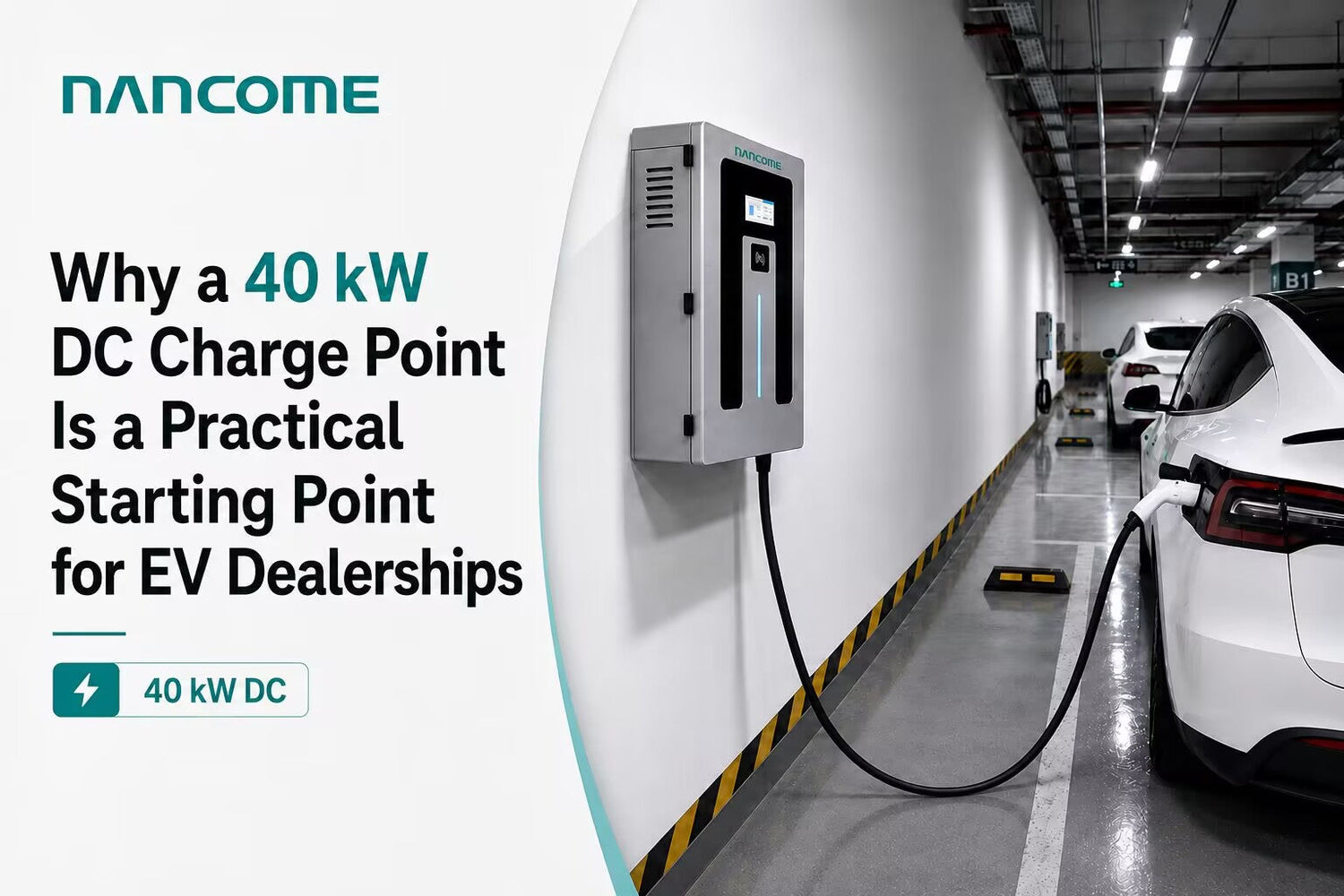
How dealerships, workshops, and maintenance networks can use 40kW and 60kW for vehicle delivery, test drives, diagnostics, and after-sales service without investing beyond actual needs
Automotive Market Overview - More Electrified Models Require New Service Infrastructure
• Brazil sold 215,023 electrified light vehicles in the first half of 2026, reaching a 15.8% market share, according to ABVE.
• The market offered 350 electrified models during the period, including 192 fully electric options, expanding the variety of vehicles served by dealerships and service centers.
• With more plug-in vehicles on the road and domestic production beginning, internal charging is becoming important for vehicle delivery, demonstrations, maintenance, and customer experience.
1) Dealership charging is different from a public charging station
• A dealership does not need to size its project like a highway charging hub. The objective is to keep vehicles available for test drives, delivery, diagnostics, and internal movement.
• The charger can serve scheduled vehicles with trained staff and a known charging window, reducing the need for excessive power.
• For this reason, the starting point should be the operational routine, not the highest power available on the market.
2) Why 40kW is a practical entry point
• A 40kW DC charger can replenish energy faster than an AC solution and serve demonstration, delivery, and after-sales vehicles within a commercial operating window.
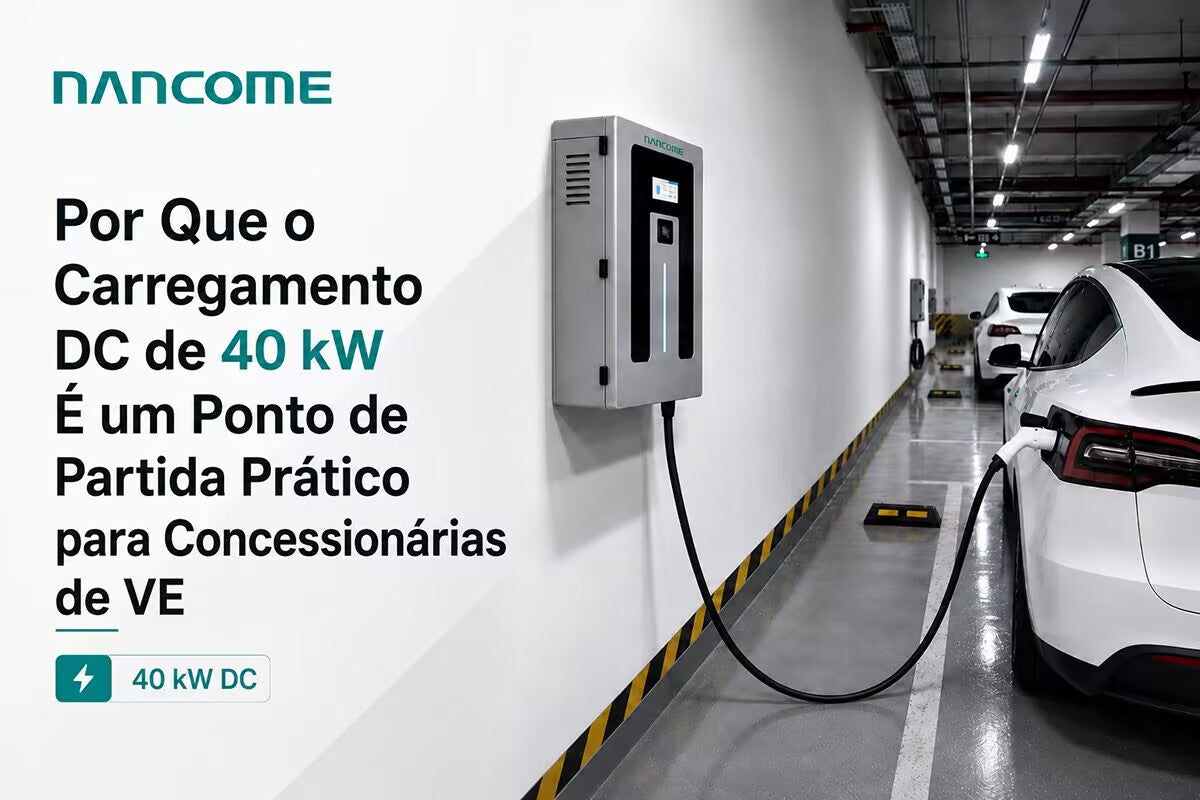
• For sites with limited space, a 20kW to 40kW wall-mounted DC solution can reduce floor-space use and integrate OCPP when required.
• 40kW also helps control the initial electrical impact, provided that transformer capacity and maximum load are confirmed.
3) When 60kW becomes more suitable
• A 60kW DC charger makes sense when the dealership serves a higher volume of vehicles, has frequent deliveries, operates an active workshop, or has more than one business unit at the same site.
• The additional power can reduce the time between vehicle arrival, inspection, and return to the customer, but it only creates value when utilization is recurring.
• A floor-standing configuration with CCS2, OCPP, 4G/LAN, and RFID can support internal operation and future platform integration.
4) Organize four charging workflows
• Test drive: keep demonstration vehicles at a sufficient energy level before customer service hours.
• Delivery: plan the final charging session before collection to avoid delivering a vehicle with insufficient battery charge.
• After-sales service and diagnostics: use charging as part of the technical process when tests, updates, or repairs require a specific state of charge.
5) CCS2 and compatibility confirmation
• For Brazilian projects, CCS2 should be the primary interface for evaluation, including for locally produced vehicles that use this standard.
• The dealership should list the brands, models, and battery voltages to be served, avoiding additional connectors without a real need.
• The charger's voltage range and current should be compatible with the vehicles and the service center's usage profile.
6) One or two outputs for the dealership
• One output is sufficient when the team schedules charging and uses one dedicated charging space.
• Two outputs can be useful in larger centers, but the power-distribution logic must be understood to prevent two vehicles from reducing expected performance without proper planning.
• The layout should provide for circulation, cables, physical protection, technical access, and signage to prevent the charging space from being used as ordinary parking.
7) Indoor installation, outdoor installation, and available space
• Indoor or semi-outdoor environments may favor compact solutions; outdoor areas require appropriate protection, a suitable base, drainage, lighting, and impact protection.
• NANCOME's wall-mounted DC line was developed for commercial applications with limited space, while floor-standing models serve projects that require higher power and greater flexibility.
• The choice between wall-mounted and floor-standing equipment should consider ventilation, maintenance, cable routing, and future expansion, not appearance alone.
8) OCPP and platform: use only the level required
• A dealership using the charger internally can operate with RFID or local control without immediately subscribing to a complete public charging platform.
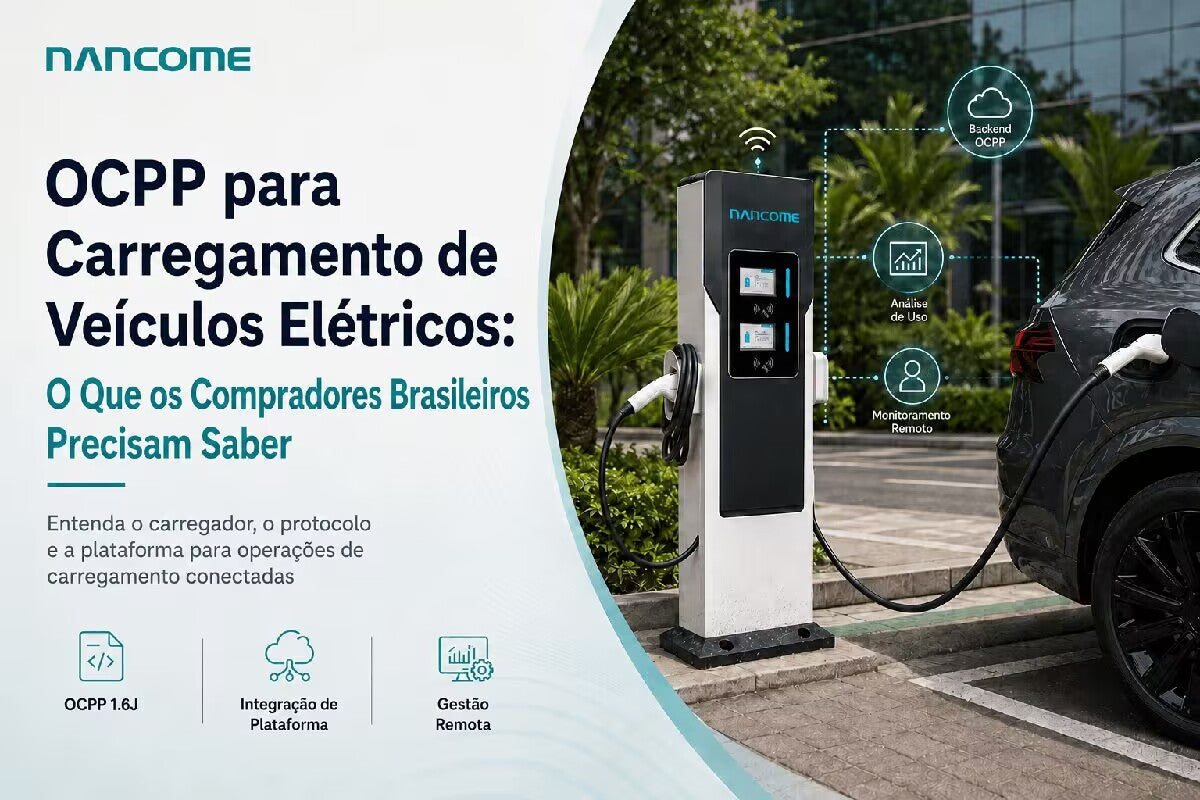
• OCPP preserves the possibility of integrating monitoring, reports, and multiple locations in the future.
• An app, payment functions, and Pix should be included only when the dealership intends to offer public charging and has already selected the responsible platform.
9) Electrical verification before installation
• Confirm three-phase power, input voltage, transformer capacity, maximum load, distribution board, protection, grounding, and cable distance.
• Assess simultaneous demand from vehicle lifts, compressors, air conditioning, workshop equipment, and other building loads.
• Electrical design, civil work, approval, and compliance should be carried out by qualified engineers and installers in Brazil.
10) Why work with NANCOME
• NANCOME combines more than 30 years of experience in electrical manufacturing with a product line that includes DC chargers, energy storage, and power distribution.
• The company provides configuration selection, customization, connection requirements, documentation, remote support, software, and recommendations for common spare parts.
• Local responsibility for installation and on-site maintenance should remain clearly defined, reducing risks for both the dealership and the installation partner.
11) Dealership project checklist
• How many test-drive, delivery, and after-sales vehicles need charging each day?
• 40kW meets the available charging window, or is 60kW required to increase vehicle turnover?
• Does the site need wall-mounted or floor-standing equipment, one or two outputs, OCPP, RFID, and internal or public operation?
12) Next step
• Request a dealership charger recommendation based on the actual vehicles, operating routine, and electrical information.
• Send site photos, the layout, distance from the distribution board, and transformer data for a preliminary evaluation.
• Plan staff training, the charging routine, and support responsibilities before the equipment is delivered.
Result:
For many Brazilian dealerships and workshops, 40kW is a practical entry point, while 60kW is a logical upgrade when vehicle volume increases. The best project keeps vehicles available for sales and service, uses CCS2, preserves OCPP integration, and respects the site's electrical capacity.
Market sources: ABVE Data (vehicle sales and charging infrastructure, 2026) and EPE/BEN 2026 (electricity mix, base year 2025).

Leave a comment
All comments are moderated before being published.
This site is protected by hCaptcha and the hCaptcha Privacy Policy and Terms of Service apply.