
Against the backdrop of China accelerating the green energy transition, building a new-type power system, and implementing the “dual-carbon” strategy, energy storage technology has become a core supporting pillar of the energy system upgrade.
Compared with traditional stationary energy storage systems, mobile energy storage—with its unique advantages of flexible deployment, mobility, fast response, and no fixed-site constraints—breaks the spatial and temporal limitations of power supply.
It is no longer restricted to fixed-site energy storage peak-shaving applications, but can adapt to multi-scenario and cross-regional power dispatching. As a highly valuable flexible resource in the new-type power system, it plays an irreplaceable role in ensuring energy security, optimizing the energy structure, enabling industrial development, and improving emergency support systems.
Flexibly regulating grid loads and strengthening the operational foundation of the new-type power system
The new-type power system is centered on wind power and photovoltaic energy, but renewable power generation is characterized by intermittency, volatility, and randomness. Large-scale grid integration can easily lead to expanded peak-valley differences, supply-demand imbalance, and voltage fluctuations, posing significant challenges to stable grid operation.
Traditional stationary energy storage systems have fixed deployment locations and limited dispatch flexibility, making them difficult to adapt to dynamic regional electricity demand changes.
Mobile energy storage enables “dynamic peak shaving and valley filling,” precisely adapting to grid operation demands.
During low electricity demand periods, the equipment can locally absorb surplus renewable electricity from wind power and photovoltaic systems, reducing curtailment and waste of clean energy.
During peak demand periods, it can be rapidly dispatched to load-intensive areas for power support, alleviating localized grid pressure without the need for large-scale grid expansion or upgrades.
At the same time, mobile energy storage systems can participate in ancillary services such as frequency regulation, voltage regulation, and backup power supply, quickly responding to grid fluctuations. This compensates for the insufficient flexibility of traditional grid regulation resources, significantly enhancing grid adaptability, stability, and self-healing capability, making it a critical flexible backbone for safe and efficient grid operation.
Supporting Dual-Carbon Goals and Promoting Green and Low-Carbon Energy Transition
To achieve the goals of carbon peaking and carbon neutrality, the core lies in building a clean, low-carbon, safe, and efficient energy system, while continuously improving the consumption and utilization rate of renewable energy.
For a long time, the mismatch between generation and consumption of wind power and photovoltaic energy has been a prominent issue. A large amount of clean energy is wasted due to insufficient grid absorption capacity, which restricts further expansion of renewable energy installed capacity.
Mobile energy storage breaks through the spatial limitations of stationary energy storage systems, allowing flexible deployment to renewable energy power plants and remote renewable energy bases. It can dynamically store surplus electricity generation, effectively solving renewable energy curtailment issues and significantly improving the utilization rate of wind and solar power.
At the same time, it can replace traditional diesel generators and other fuel-based power supply equipment, and is widely used in construction sites, outdoor operations, and temporary events. By replacing fossil energy with clean electricity, it reduces carbon emissions and air pollution caused by fuel combustion.
Through the innovative “energy storage + mobility” model, clean electricity can be efficiently utilized across scenarios and regions, accelerating the iteration of traditional high-energy-consuming power supply models, and providing key support for the low-carbon transformation of the energy structure and the steady realization of dual-carbon strategy goals.
Strengthening Emergency Power Supply Capacity and Enhancing Energy Security Resilience of Society
Extreme weather, geological disasters, and power grid failures can easily trigger localized power outages, directly affecting livelihoods, public services, and the operation of key industries.
Traditional emergency power supply methods mainly rely on stationary backup power sources and diesel generators, which suffer from slow deployment, poor mobility, high pollution, and limited endurance. As a result, they struggle to meet the power supply needs of complex and sudden scenarios.
Mobile energy storage equipment offers convenient deployment, fast startup, low-noise and environmentally friendly operation, and strong adaptability. It can quickly be dispatched to blackout-affected disaster areas and remote fault regions, providing uninterrupted emergency power to critical public facilities such as hospitals, transportation hubs, communication base stations, and government service centers, ensuring basic livelihood operations and orderly rescue and disaster relief efforts.
At the same time, in special operation scenarios such as mining sites, ports, and field exploration, it can respond to sudden power outage risks and ensure industrial production safety. In urban power grid renovation and line maintenance scenarios, it can temporarily replace grid power supply, enabling continuous operation and production without shutdowns, minimizing outage losses, and comprehensively enhancing society’s emergency energy support capability and energy security resilience.
Value of Empowering Diversified Industry Development and Activating New Drivers of the Energy Economy
Mobile energy storage is applicable across multiple sectors, including industry, transportation, infrastructure construction, and new energy services. It effectively addresses electricity consumption pain points in various scenarios, reduces industrial operating costs, and empowers high-quality development of the real economy.
In the industrial sector, scenarios such as mining sites and factories can use mobile energy storage to achieve peak-valley electricity price arbitrage, avoid high electricity costs during peak hours, and stabilize production voltage while reducing equipment wear. Industry data shows that the application of mobile energy storage can effectively reduce comprehensive energy costs of industrial and mining enterprises by 30%–40%.
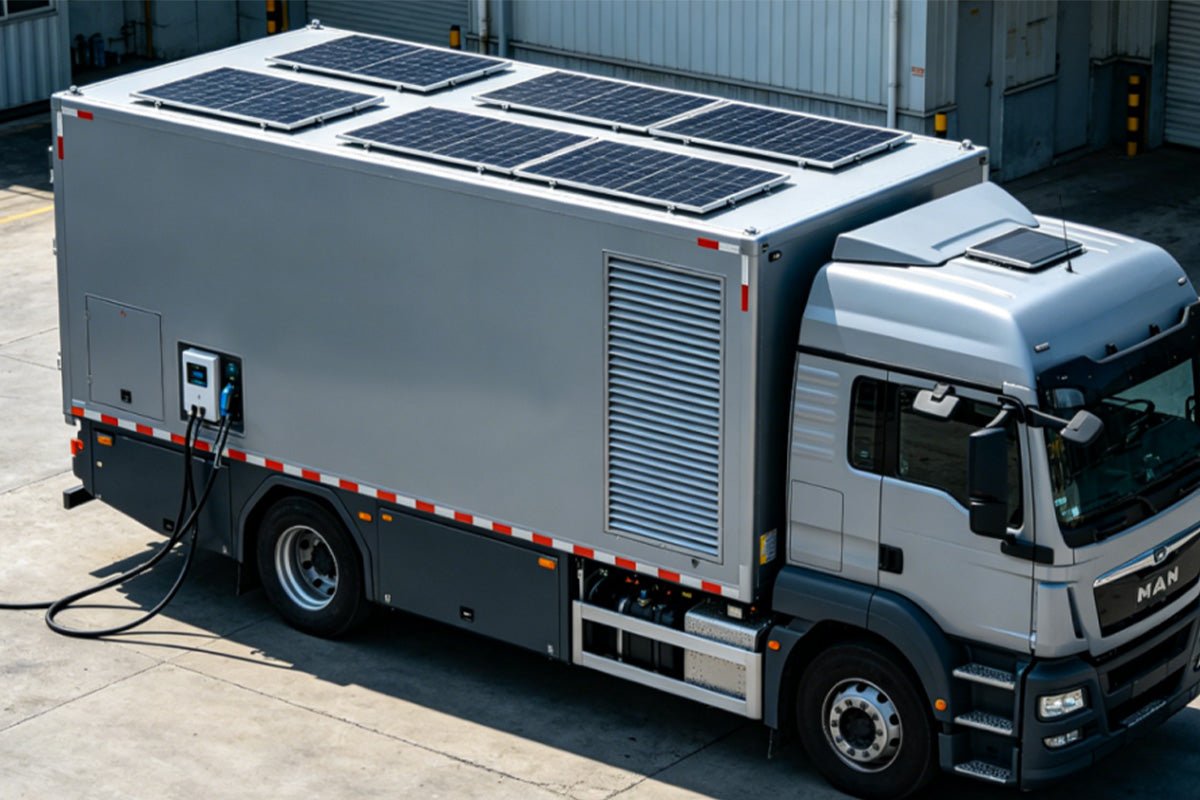
In the new energy vehicle (NEV) sector, mobile energy storage charging vehicles break through the site and grid capacity limitations of fixed charging stations, enabling flexible energy supply in hotspots such as commercial districts, residential communities, and highway service areas. This helps resolve EV charging difficulties and peak-time congestion, improving the supporting service system for NEVs and accelerating industry adoption
In the infrastructure sector, construction sites and temporary venues no longer need dedicated power line installation. Mobile energy storage can directly meet electricity demands, significantly shortening project preparation cycles and reducing infrastructure investment costs.
In addition, mobile energy storage can be aggregated into distributed energy resources and integrated into virtual power plants to participate in electricity market trading, enabling innovative energy commercialization models and fostering new energy service industries, thereby injecting new momentum into energy sector economic growth.
Bridging the Gaps in Remote Areas and Achieving Equitable Energy Access
In some remote rural areas, mountainous regions, and field operation zones in China, there are persistent issues such as weak power grid infrastructure, insufficient line coverage, and high costs of expansion and upgrades. These regions have long suffered from unstable or even unavailable power supply, which restricts local production, daily life, and regional development.
Mobile energy storage does not rely on fixed grid infrastructure and can operate independently as a distributed power supply unit. It can provide stable and clean electricity to remote villages, off-grid communication base stations, agricultural planting and livestock farming bases, and border stations, effectively addressing infrastructure gaps in remote regions.
This lightweight and mobile power supply model avoids the high investment required for large-scale grid expansion, achieving inclusive electricity access in a low-cost and high-efficiency manner. It supports rural revitalization and remote area development, promoting balanced energy service development between urban and rural regions.
Coal, as the country's primary energy source, undertakes the core mission of ensuring stable energy supply security. Traditional coal mining operations face challenges such as unstable power supply, high energy consumption costs, lagging low-carbon transformation, and underutilized idle resources.
Mining energy storage serves as a new application model tailored for mining scenarios. With core advantages such as “dual emergency use, peak-valley regulation, renewable energy consumption, and resource reuse,” it is deeply integrated into the entire coal production process. It is a key lever for promoting safe upgrading, energy saving and carbon reduction, green transformation, and activation of idle resources in the coal industry, holding significant practical and strategic value for high-quality and sustainable development of the coal sector.
Strengthening Safety Production Baseline and Fundamentally Resolving Mine Power Outage Risks
Safety production is the core baseline of coal mining operations. Stable power supply for core underground equipment—such as ventilation systems, gas drainage systems, water drainage systems, and hoisting and transportation systems—directly determines personnel safety and production safety in mines.
In China, coal mines generally adopt dual-circuit external grid power supply. However, under extreme weather conditions, line failures, or grid maintenance, simultaneous power loss in both circuits may still occur. This can cause sudden shutdowns of critical underground equipment, easily leading to serious safety hazards such as gas accumulation, mine flooding, and personnel entrapment. Traditional emergency support systems therefore have clear shortcomings.
Mining energy storage systems feature millisecond-level rapid response capability and can serve as dedicated emergency backup power for mines, fully replacing traditional diesel generators. Upon grid outage, they can instantly start and continuously supply uninterrupted power to underground safety-critical systems, monitoring and communication systems, and lighting systems, preventing safety incidents caused by power loss and building the first line of defense for mine safety production.
At the same time, energy storage systems can stabilize voltage within mining areas and smooth power fluctuations, solving grid impact issues caused by frequent start-stop operations of large excavation equipment. This ensures stable operation of production equipment, reduces equipment failure rates, and comprehensively enhances the safety resilience and risk resistance of coal mining operations.
Optimizing Energy Consumption Structure and Significantly Reducing Coal Mining Operational Costs
Coal mining is a high-energy-consumption industrial scenario, where electricity loads across the entire process—mining, transportation, washing, and ventilation—are large and concentrated in specific time periods. This leads to long-term issues such as high peak electricity prices, high energy losses, and severe energy waste, keeping enterprise electricity costs persistently high.
At the same time, in open-pit mining operations, downhill braking of mining trucks and frequent equipment start-stop processes generate large amounts of surplus mechanical energy, which is traditionally dissipated entirely as heat energy loss, resulting in significant energy waste.
The deployment of mining energy storage systems enables refined energy management. By leveraging peak-valley electricity price differences, energy can be stored during low-price periods and discharged during high-price periods, significantly reducing peak electricity expenditure and overall power costs for enterprises.
For open-pit mining transportation scenarios, dedicated energy storage equipment can recover surplus energy generated during downhill braking of mining trucks, enabling energy recycling, reducing fuel and electricity consumption, and lowering equipment wear and maintenance costs.
In addition, energy storage systems can replace high-energy-consumption and high-pollution diesel emergency generator sets, reducing costs related to fuel procurement, storage, and maintenance, further optimizing the mine’s energy consumption structure and improving overall operational efficiency.
Empowering Green and Low-Carbon Transformation and Supporting the Coal Industry in Achieving Dual-Carbon Targets
Under the dual-carbon strategy, traditional high-carbon coal mines urgently need to move away from extensive production models and achieve a transformation from “high-carbon production” to “green and low-carbon” development.
At present, most mining areas have deployed distributed photovoltaic and wind power systems, but due to the intermittency and volatility of renewable energy generation, the utilization rate of green electricity in mining areas remains low, and curtailment of renewable energy is still common. This limits large-scale substitution of traditional thermal power and slows down the low-carbon transformation of mining operations.
Mining energy storage systems can effectively smooth the output fluctuations of wind and photovoltaic power, store surplus renewable electricity generated within mining areas, and enable local consumption and utilization of clean energy. This significantly improves the utilization rate of renewable energy and gradually builds a wind–solar–storage integrated energy supply system for mining areas.
By replacing traditional thermal power and fuel-based energy supply with clean stored electricity, carbon emissions, exhaust gases, and particulate pollution in mining operations can be significantly reduced, fundamentally changing the traditional image of coal mines as high-energy-consumption and high-pollution industries.
At the same time, energy storage systems produce no exhaust gas or noise pollution and are suitable for both underground and surface mining environments. This helps coal mines meet the standards of green and intelligent mine construction, and promotes the coal industry’s transition toward low-carbon upgrading.
Revitalizing Idle Mining Resources and Building a Circular Economy Model
With the coal industry undergoing capacity reduction and the closure of aging mines, China has accumulated a large number of abandoned mine shafts, mined-out areas, underground tunnels, and idle industrial sites. These high-quality spatial resources and infrastructure have remained underutilized for a long time, lacking efficient reuse pathways. At the same time, idle mines also pose potential risks such as geological collapse and environmental degradation.
Mining energy storage systems can leverage abandoned mine shafts and underground goaf areas to develop long-duration energy storage projects such as pumped storage, gravity energy storage, and thermal energy storage. By reusing existing tunnels, ventilation, drainage, and power transmission infrastructure, project site selection, civil construction, and equipment investment costs for energy storage systems can be significantly reduced.
Through the resource-based and energy-based reutilization of existing mining assets, abandoned mines can be transformed into new-type energy storage power stations, achieving a transformation from “closed mines into green energy bases.”
This not only revitalizes idle state-owned assets and eliminates safety hazards in abandoned mines, but also expands large-scale deployment scenarios for energy storage. It builds a circular economy system for the coal industry—“extraction → utilization → regeneration”—thereby extending the lifecycle of the coal industry.
Supporting Intelligent Mine Construction and Driving Upgrading of the Coal Industry
Intelligence, digitalization, and greening are the core directions for the modernization of the coal mining industry. Intelligent mining and excavation systems, unmanned mines, remote monitoring systems, and digital management and control systems place extremely high requirements on the stability, continuity, and timeliness of power supply. Traditional grid power supply models are difficult to adapt to the high-precision and high-reliability electricity demands of intelligent mines. Any power fluctuation or short-term outage can lead to shutdowns of smart equipment, data interruption, and disruptions to intelligent mining operations.
Mining energy storage systems can establish a dual power supply system (grid power + energy storage backup), providing continuous and stable electricity support for intelligent mining equipment and digital systems. This ensures the all-day stable operation of unmanned excavation, intelligent transportation, and online monitoring systems, thereby strengthening the energy foundation of intelligent mine construction.
At the same time, large-scale mining energy storage systems can be aggregated into distributed energy nodes, integrated into regional virtual power plants, and participate in grid peak shaving, frequency regulation, and other ancillary services, expanding diversified business models for coal mines. This enables traditional coal enterprises to transform from single energy producers into integrated energy service providers, unlocking new momentum for the development of the coal industry.

Оставить комментарий
Все комментарии перед публикацией проверяются.
Этот веб-сайт защищается hCaptcha. Применяются Политика конфиденциальности и Условия использования hCaptcha.